Brazil is one of the few places where a modest Western income buys a genuinely good life: a beachfront apartment, eating out without flinching, free universal healthcare, and a US$2,000 monthly budget that stretches further than it does almost anywhere in Europe or North America. But the headline numbers hide real variation between cities and a handful of costs that catch newcomers off guard. This guide gives you honest, 2026 city-by-city budgets in reais, dollars, and euros — and the legal and tax facts that quietly shape what you actually pay.
We are an English-speaking, OAB-licensed Brazilian law firm that helps foreigners move to, invest in, and build a life in Brazil. Cost of living is the question we hear first, so we have written the answer we wish more people had before they arrived. Throughout, we use an approximate exchange rate of R$5.2 to the US dollar and R$5.9 to the euro — round figures, label them "approx," and check the live rate before you budget seriously, because the real moves and so does your spending power.
The short answer: how much does it cost to live in Brazil?
For a single person, a comfortable monthly budget in most Brazilian cities runs US$1,500 to US$2,500 (roughly €1,350 to €2,250, or R$7,800 to R$13,000). That figure covers a decent one-bedroom apartment in a safe, walkable neighborhood, groceries, eating out a few times a week, local transport, a private health plan, and a normal social life. You can live on less — students and frugal digital nomads do it on US$1,000 to US$1,200 in smaller cities — and you can spend far more in upscale São Paulo or beachfront Rio.
A couple typically spends less than double a single person, because rent and utilities don't double. Plan on US$2,500 to US$4,000 for two people living comfortably in a major city, less in the interior. A family with children adds school fees, which in the international-school world are the single biggest line item by a wide margin.
In Brazil, the cost is rarely the hard part. The bureaucracy is. Budget for both.
What US$2,000 a month actually buys you
US$2,000 a month (about €1,800, or roughly R$10,400 at our approximate rate) is the number most relocating retirees and remote workers fixate on, partly because it's roughly the passive-income figure associated with Brazil's retirement residence — around US$2,000/month, though you should confirm the current figure with a consulate or the Polícia Federal, as this threshold is the least firmly pinned of Brazil's income tests. Here is what that budget realistically delivers for one person.
- In a mid-size city (Florianópolis, Curitiba, Belo Horizonte, Recife): a one-bedroom apartment in a good neighborhood, all utilities and fast internet, a private health plan, weekly restaurant meals, a gym, weekend trips, and money left over to save. US$2,000 here is genuinely comfortable, even generous.
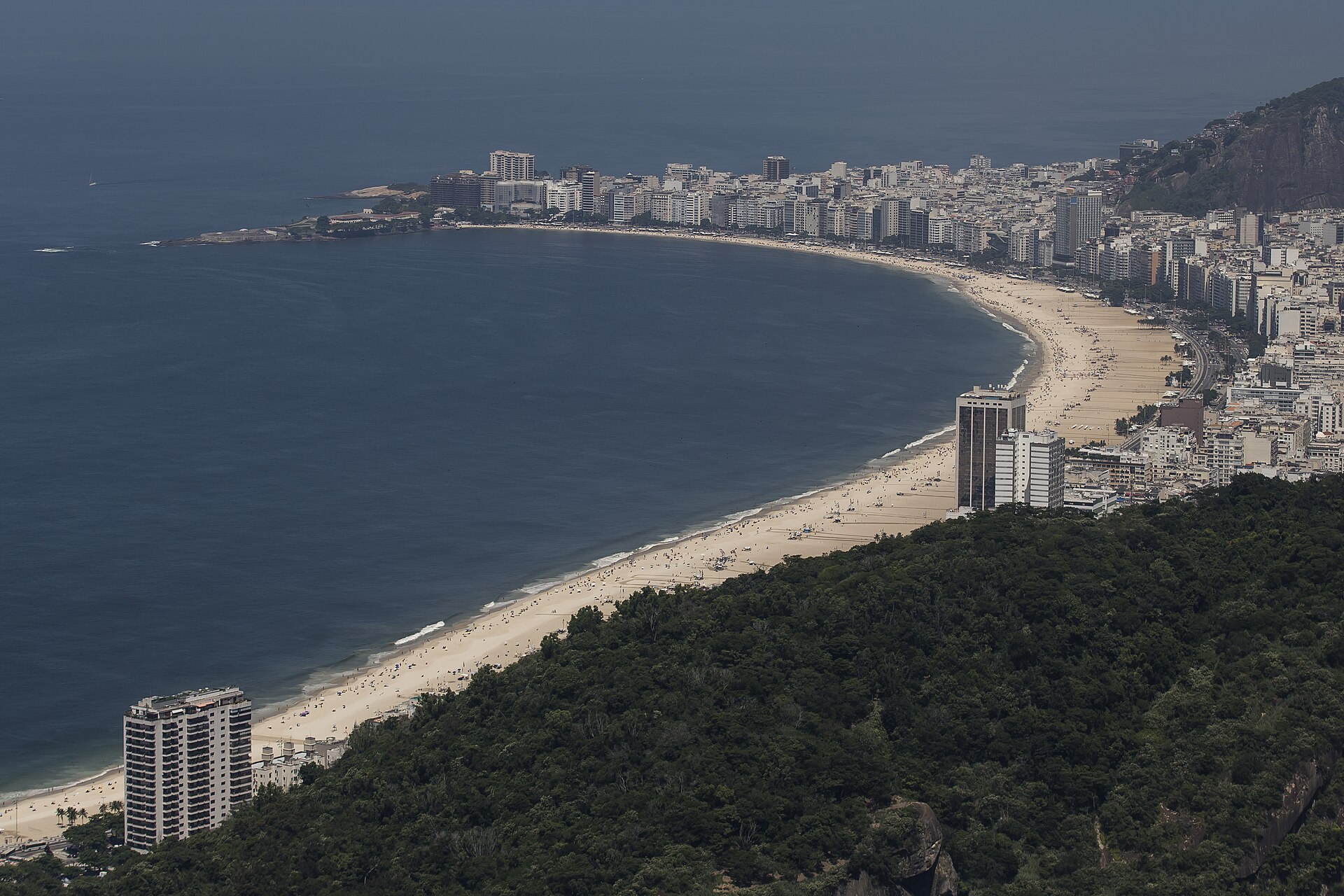
- In Rio de Janeiro: a one-bedroom apartment a few blocks back from the beach (not on the sand in Ipanema, but a short walk in Botafogo, Flamengo, or Tijuca), with a healthy lifestyle and modest savings. Beachfront Zona Sul addresses push you toward the top of, or past, the budget.
- In São Paulo: a comfortable one-bedroom in a central, well-connected district, eating out, culture, and transport — but Brazil's most expensive city leaves less margin than the same money elsewhere.
- In a smaller interior town or the Northeast: a noticeably better standard of living — a larger place, frequent dining out, household help a few times a week, and real savings.
The honest takeaway: US$2,000/month is a comfortable middle-class life almost everywhere in Brazil and an outright good one outside the two big southeastern cities. It is not, by itself, a luxury budget in São Paulo or beachfront Rio — but it's close to one in Salvador, Recife, or the interior.
City-by-city: monthly budgets for a single person
The table below shows realistic monthly budgets for a comfortable single person — a one-bedroom apartment in a safe central neighborhood, utilities, internet, groceries, eating out a few times a week, local transport, and a basic private health plan. These are mid-range, not bare-bones and not luxury. Rents are the swing factor; everything else is broadly similar nationwide. Verify current rents on the ground, because Brazil's rental market moves fast and a single listing tells you nothing.
| City | 1-bed rent (central) | Comfortable single budget | In US$ / € |
|---|---|---|---|
| São Paulo | R$3,000-3,600 | R$10,000-13,000 | ~US$1,950-2,500 / €1,700-2,200 |
| Rio de Janeiro | R$2,800-3,500 | R$9,500-12,500 | ~US$1,850-2,400 / €1,600-2,100 |
| Florianópolis | R$2,500-3,200 | R$8,500-11,500 | ~US$1,650-2,200 / €1,450-1,950 |
| Curitiba | R$1,800-2,500 | R$7,000-9,500 | ~US$1,350-1,850 / €1,200-1,600 |
| Belo Horizonte | R$1,800-2,600 | R$7,000-9,500 | ~US$1,350-1,850 / €1,200-1,600 |
| Recife | R$1,800-2,600 | R$6,800-9,500 | ~US$1,300-1,850 / €1,150-1,600 |
| Salvador | R$1,600-2,400 | R$6,500-9,000 | ~US$1,250-1,750 / €1,100-1,550 |
| Porto Alegre | R$1,400-2,200 | R$6,500-9,000 | ~US$1,250-1,750 / €1,100-1,550 |
If you're weighing where to land, our companion guide to the best cities in Brazil for expats goes deeper on neighborhoods, climate, safety, and the trade-offs each city makes. For remote workers specifically, the digital-nomad cities guide ranks them on internet, coworking, and community.
Housing and rent: the biggest line item
Rent is where your budget lives or dies. The national average asking rent for a one-bedroom apartment sits at roughly R$2,300 (~US$440 / €390) in early 2026, but that average spans everything from a R$1,400 flat in Porto Alegre to R$3,500-plus for an upscale São Paulo address. A few features of the Brazilian rental market matter for your wallet:
- Condominium fees (condomínio). Almost every apartment building charges a monthly condomínio covering the doorman, cleaning, elevators, and shared areas. It is separate from rent and ranges from R$300 in a simple building to R$1,500+ in a tower with a pool, gym, and 24-hour security. Always ask for the rent and the condomínio together — newcomers routinely underbudget by forgetting it.
- IPTU (property tax). The municipal property tax is often passed to the tenant, billed monthly or annually. Add R$50-300/month depending on the property.
- Furnished vs. unfurnished. Furnished and short-term rentals cost a clear premium but save you the upfront cost and hassle of furnishing. Long unfurnished leases are cheaper per month but require a deposit and a guarantee.
- The guarantee problem. Brazilian landlords want security: a local guarantor (fiador), a deposit of up to three months, or a paid rental-insurance product (seguro-fiança). Foreigners without a Brazilian guarantor usually pay for insurance or a deposit. This is the single most common friction point for new arrivals.
Buying instead of renting
If you plan to stay, buying can make sense — and foreigners buy urban residential property freely, with no nationality or geographic restriction. Budget for closing costs of roughly 5-7% on top of the price: the ITBI transfer tax runs about 2-4% (typically ~3% in São Paulo and Rio, charged on the higher of the price or the official valor venal), plus notary and registry fees of around 1-1.5%. Two cautions worth knowing before you fall in love with a listing:
- Rural land is restricted. Foreign ownership requires INCRA authorization and is capped (no more than 25% of a municipality's area under foreign ownership, and no more than 10% to any one nationality). A "country property" purchase is not the simple deal a city apartment is.
- The border strip (faixa de fronteira) — 150 km along international borders — requires National Defense Council approval for foreign buyers.
- Coastal "marine land" (terreno de marinha). On much of the coast, you can own the building but the underlying land is federal: you pay an annual foro fee and a laudêmio on transfer. Reform proposals are currently pending, so treat this as the rule as it currently stands and check before you buy beachfront.
Real-estate investment is also a residence route in its own right: R$1,000,000 in urban property (reduced to R$700,000 in the North or Northeast) qualifies you for investor residence. We cover that path in detail in the Brazil golden visa guide, and the mechanics of a clean purchase in buying property in Rio de Janeiro.
Groceries, eating out, and daily costs
Food is one of Brazil's genuine bargains, especially if you eat the way locals do. Fresh produce from a feira (street market) is cheap and excellent; imported packaged goods, wine, and electronics are expensive thanks to import taxes. A rough sense of 2026 prices:
| Item | Typical price (R$) | Approx US$ / € |
|---|---|---|
| Lunch at a per-kilo or prato feito restaurant | R$25-45 | ~US$5-9 / €4-8 |
| Dinner for two, mid-range restaurant | R$120-220 | ~US$23-42 / €20-37 |
| Domestic beer (bar) | R$8-15 | ~US$1.50-3 / €1.40-2.50 |
| Cappuccino | R$8-14 | ~US$1.50-2.70 / €1.40-2.40 |
| Liter of milk | R$5-7 | ~US$1-1.35 / €0.85-1.20 |
| Monthly groceries, one person (local brands) | R$700-1,100 | ~US$135-210 / €120-185 |
| Mobile/internet plan | R$50-120 | ~US$10-23 / €8-20 |
| Utilities (electric, water, gas) 1-bed | R$200-450 | ~US$38-87 / €34-76 |
Electricity is the utility that surprises people: air conditioning in Rio's summer or a heavy-use household can push the bill higher than expected. Otherwise, daily life is affordable — a settled expat who shops and eats like a local often finds their non-rent spending lower than back home, even allowing for the occasional imported indulgence.
Transport: getting around without a car
Most expats in Brazilian cities don't need a car. Public transport is cheap (a single bus or metro fare is typically R$4.50-5.50), and ride-hailing apps are widespread and inexpensive by Western standards — a 20-minute Uber across town often costs R$20-40 (~US$4-8). If you do drive, a few cost notes:
- Your foreign licence is valid for up to 180 days after you establish residence (carry your passport and an International Driving Permit). After that, you exchange it for a Brazilian CNH.
- Many nationalities skip the driving test. Holders of US, Portuguese, French, German, and Spanish licences (among others) are exempt from the practical exam; a medical and psychological assessment is still required. Our guide to driving in Brazil and exchanging your foreign licence has the full procedure and costs.
- Cars are expensive to buy relative to incomes, thanks to taxes; fuel is moderately priced; insurance and the annual IPVA vehicle tax add up. For city life, ride-hailing plus the occasional rental is usually cheaper than ownership.
Healthcare: free public, affordable private
Healthcare is one of Brazil's strongest value propositions for expats. The public system, SUS (Sistema Único de Saúde), is free and universal to everyone on Brazilian soil — including foreign residents and visa-holders — with no waiting period to enroll. You register with your CPF (and usually your CRNM residence card). SUS covers emergencies, hospital care, vaccinations, and prescriptions, though waits for non-urgent specialist care can be long.
Because of those waits, most expats also carry a private health plan (plano de saúde). Premiums depend heavily on age, coverage, and city. As a rough 2026 guide:
- A healthy adult in their 30s-40s: roughly R$300-700/month (~US$58-135) for a solid plan.
- Older adults (60+): premiums rise sharply with age and can reach R$1,500-3,000+/month — a major budget line for retirees, and a reason to price plans carefully before relocating.
Out-of-pocket private care is also affordable by US or UK standards: a private specialist consultation might cost R$250-500, and dental work is famously good value. We unpack the public/private trade-off, plan tiers, and how pre-existing conditions are handled in our dedicated guide to healthcare in Brazil for foreigners.
Schools and family costs
For families, school is the budget-changer. Public schools are free but Portuguese-medium and uneven in quality; most expat families with school-age children choose private or international schools.
- Brazilian private schools: roughly R$1,500-4,000/month per child, varying widely by city and reputation.
- International schools (American, British, French, German curricula in São Paulo, Rio, Brasília, and a few other cities): these are premium and priced in line with international schools worldwide — often R$5,000-12,000+/month per child, plus enrollment and materials fees. For two children, this can easily exceed everything else in your budget combined.
If international schooling is on your list, build it into the relocation math from day one. Our overview of international schools in Brazil for expat families covers the main options, curricula, and waitlists. Many families also budget for Portuguese lessons — see learning Portuguese as an expat — which dramatically lowers the "foreigner tax" you pay on everything from rentals to repairs.
The income rules behind the budget: visas and thresholds
Your cost of living is only half the equation; the other half is which visa lets you live here, and what income it demands. Brazil's main residence routes have explicit financial tests:
- Digital nomad visa (VITEM XIV): requires US$1,500/month in foreign income or US$18,000 in savings. It grants one-year residence, renewable once. (Ignore any "+US$60 per dependent" figure you see online — it is not official.) Details in our digital nomad visa guide.
- Retirement / rentista residence: built on around US$2,000/month in passive income — but confirm the current figure with a consulate or the Polícia Federal, as this threshold is the least firmly fixed. Walk-through in our retire in Brazil guide and retirement visa page.
- Investor residence (real estate): R$1,000,000 in urban property, reduced to R$700,000 in the North/Northeast. Initial four-year term, convertible to permanent if maintained.
- Investor residence (company): R$500,000 standard, reduced to R$150,000 for innovation/startup/R&D ventures. See investment visa and opening a company in Brazil (LTDA).
- Mercosur residence (VITEM XIII): for nationals of Argentina, Bolivia, Chile, Colombia, Ecuador, Paraguay, Peru, Uruguay and others — simplified, no prior consular visa, two-year temporary then permanent. See the Mercosur residence visa guide.
- Family reunion: for spouses, partners, children, and parents of a Brazilian child, with full work rights — register within 90 days. Often the simplest path if you have a Brazilian family tie. See permanent residency by marriage.
Whichever route fits, you'll register for your CRNM residence card with the Federal Police within 90 days of approval or entry. The CRNM itself costs roughly R$372.90 in 2026 (issuance plus processing). Step-by-step in getting your CRNM card. If you're coming as a tourist first, US, Canadian, and Australian citizens now need an e-visa (reintroduced in April 2025): around US$80-81, valid 10 years, 90 days per entry up to 180 days per 12 months — confirm the current rule and fee, covered in our 2026 tourist e-visa guide.
The cost no one budgets for: taxes
The single most common — and expensive — mistake foreigners make is treating tax as an afterthought. Your cost of living in Brazil is shaped by when and how Brazil starts taxing you. The rules in brief:
- The 183-day rule. Spend more than 183 days in Brazil (consecutive or not) in any rolling 12-month period and you become a tax resident. Permanent-visa holders are resident from entry; work-visa holders from the start of employment.
- Residents are taxed on worldwide income under a progressive income tax (IRPF) with a top marginal rate of 27.5% — your foreign salary, pension, dividends, and rental income included, whether or not the money enters Brazil.
- The 2026 reform (Lei 15.270/2025) helps lower earners. From 1 January 2026, monthly income up to R$5,000 is fully exempt, with partial relief up to R$7,350/month and a full annual exemption up to R$60,000. A new minimum tax targets high earners, and there's a 10% withholding on monthly dividends over R$50,000 from a single entity.
- Carnê-Leão. Foreign-source or non-withheld income must be reported and prepaid monthly through Receita Federal's e-CAC — a rhythm that catches almost every newcomer off guard.
One more figure worth flagging if you ever sell property as a non-resident: capital-gains treatment is contested. Historically a flat 15%, current PwC guidance applies a progressive scale (15% / 17.5% / 20% / 22.5%, rising with the gain; 25% if the seller is in a tax haven). Present the progressive scale as current, but get a tax professional to confirm your specific situation and check any treaty before you sell. Our tax team handles exactly this.
Banking and getting your money in
To pay rent, receive income, and live normally, you'll want a Brazilian bank account. The essentials:
- A CPF is mandatory for any account. With just a passport and CPF, a non-resident can open a CDE (non-resident) account; a full resident account usually requires your CRNM and proof of address.
- Digital banks — Nubank, C6, Inter — are popular, low-fee, and app-based, and have made opening an account far easier for residents than the old branch-based process.
- Pix, Brazil's instant-payment system, is everywhere and free for individuals — you'll use it for rent, restaurants, and street markets alike.
- Getting larger sums in (a property deposit, savings) is best done through registered channels so the funds are documented for future repatriation and tax purposes. Don't improvise this with cash or informal transfers.
The full process, including which banks accept non-residents, is in opening a bank account in Brazil as a foreigner, and our banking support service helps foreigners who hit the common roadblocks.
A realistic first-month and ongoing budget
Settling in costs more than steady-state living. A realistic first-month outlay for one person in a major city, before furniture, often looks like: first month's rent plus condomínio, a deposit or rental-insurance fee (one to three months of rent equivalent), the first private health-plan premium, a phone plan, and assorted setup costs — plan for the equivalent of two to four months' rent up front. After that, your monthly costs settle into the city ranges in the table above.
Use this checklist to make sure nothing is missing from your monthly number:
- Rent plus condomínio and IPTU (ask for all three together)
- Utilities — and don't underestimate summer air conditioning
- Private health plan (priced by age — get a quote before you move)
- Mobile and home internet
- Groceries and dining at local, not imported, price points
- Transport (ride-hailing and metro, or car taxes and fuel if you drive)
- School fees, if you have children
- A tax provision — Carnê-Leão prepayments and your annual filing
- A buffer for the exchange rate moving against you
A composite example
Consider a remote-working couple from the US, both in their late 30s, who settle in Florianópolis on digital-nomad residence. They rent a comfortable two-bedroom near the beach for R$4,200 plus R$600 condomínio, spend about R$2,500 on groceries and dining, R$1,200 on two private health plans, R$400 on utilities and internet, and R$800 on transport and incidentals — roughly R$9,700/month, about US$1,870 between them. They add a tax provision for their US filings and Brazilian Carnê-Leão, and keep a buffer against the real-dollar rate. Their verdict, which we hear often: a better daily life than they had at home, for less — provided they handled the visa and tax side properly from the start. (This is an illustrative composite, not a specific client.)
How we help
Cost of living is the easy part to research and the hard part to get wrong cheaply. The expensive mistakes are legal and fiscal: signing a lease you can't read, choosing the wrong visa for your income, missing the 90-day CRNM window, ignoring Carnê-Leão until Receita Federal notices, or selling property without planning the gain. We are an OAB-licensed Brazilian firm that works with foreigners in English across exactly these areas — immigration and visas, real estate, tax, and banking. If you want a clear-eyed read on what your move will really cost — and how to structure it so the savings are real and the surprises few — get in touch or see how it works.
Frequently asked questions
How much money do I need per month to live comfortably in Brazil?
For a single person, plan on roughly US$1,500-2,500 per month (about €1,350-2,250) for a comfortable life in most cities — a one-bedroom apartment in a good neighborhood, groceries, eating out, transport, and a private health plan. São Paulo and beachfront Rio sit at the top of that range; smaller cities and the Northeast are noticeably cheaper. A couple typically spends US$2,500-4,000 together.
What can US$2,000 a month buy me in Brazil?
In most Brazilian cities, US$2,000/month buys a comfortable middle-class life and real savings, and an outright good standard of living outside São Paulo and beachfront Rio. It's also close to the passive income associated with Brazil's retirement residence — around US$2,000/month, which you should confirm with a consulate or the Polícia Federal, as that threshold is the least firmly fixed.
Is healthcare in Brazil free for foreigners?
Yes. The public system, SUS, is free and universal to everyone on Brazilian soil, including foreign residents and visa-holders, with no waiting period — you register with your CPF and usually your CRNM. Because non-urgent specialist waits can be long, most expats also carry a private health plan, typically R$300-700/month for a healthy adult and considerably more for those over 60. See our healthcare guide.
Which Brazilian city is cheapest for expats?
Among the major cities, Salvador, Recife, and Porto Alegre tend to be the most affordable, with comfortable single budgets often under US$1,800/month, while São Paulo is the most expensive. Interior towns are cheaper still. Compare the trade-offs in our best cities for expats guide.
Will I have to pay tax in Brazil as a foreign resident?
If you spend more than 183 days in Brazil in a rolling 12 months (or hold a permanent-type visa from entry), you become a tax resident, taxed on worldwide income at progressive rates up to 27.5% — though from 2026, monthly income up to R$5,000 is exempt. Americans should note there's no US-Brazil tax treaty; you rely on the Foreign Tax Credit and still file US returns. See our expat taxes guide.
Do I need a Brazilian bank account, and is it hard to open one?
You'll want one to pay rent and live normally, and a CPF is mandatory to open any account. Non-residents can open a CDE account with a passport and CPF; resident accounts usually need a CRNM and proof of address. Digital banks like Nubank and C6 have made the process much easier — details in opening a bank account as a foreigner.