Brazil is one of the few countries that will give a retiree a real, permanent-track home in exchange for nothing more than a steady pension. No property purchase, no large deposit locked in a local bank — just proof that money arrives every month. This guide walks through exactly what the retirement (pensioner/rentista) residence requires in 2026, how the application actually moves, and the two realities — tax and healthcare — that catch almost every newcomer off guard.
We are an English-speaking, OAB-licensed Brazilian law firm, and the retirement route is one of the most common reasons people contact us. It is genuinely accessible. It is also surrounded by stale internet advice, half-true forum numbers, and a bureaucracy that punishes guesswork. The aim here is to give you the honest version: what is settled, what is in flux, and where you should confirm a figure with a consulate or the Polícia Federal before you rely on it.
What the Brazil retirement visa actually is
There is no single document literally called “the retirement visa” in the modern Migration Law. What people mean is a residence authorization based on retirement income — the pensioner (aposentado) route — and its close cousin, the rentista residence for people living on stable passive income. Both are governed by Brazil's Migration Law (Lei 13.445/2017) and the resolutions of the National Immigration Council (CNIg). In practice they work the same way: you prove you can support yourself in Brazil from income generated outside a Brazilian job, and you receive temporary residence that renews and eventually converts to permanent.
The distinction that matters to you is the source of the money. The pensioner route expects a genuine pension — a government or private retirement benefit paid for life. The rentista route covers other stable, recurring income (rental income, annuities, structured drawdowns). If your money is real but doesn't look like a classic pension, you are not stuck — you are simply on a different form, and getting that classification right at the start saves a rejection later.
Brazil doesn't ask you to buy your way in. It asks you to prove the money keeps coming.
The income requirement, precisely
The headline figure you will see quoted is around US$2,000 per month in retirement or passive income for the main applicant, with the same income generally stretching to cover a spouse and dependents who move with you. Treat that number with care. The retirement threshold is the least firmly pinned of all Brazil's residence figures: it has drifted over the years, it is sometimes expressed in local currency, and individual consulates and Federal Police units have applied it with small variations.
Use around US$2,000/month as your planning anchor, but confirm the exact, current threshold with the Brazilian consulate covering your home region or directly with the Polícia Federal before you file. Do not rely on a forum post or an old blog — this is the single most common place we see outdated numbers repeated as gospel.
It has to be the right kind of income
For the pensioner route, the money must read as retirement income — a government or private pension, not a pile of savings dressed up to look like a pension. The evidentiary standard is concrete:
- An official letter from the paying institution (your national pension office, the private pension fund, the annuity provider) stating the amount, the currency, and that the payment is ongoing and lifelong where applicable.
- Bank statements showing the payments actually landing, ideally for several consecutive months.
- Where relevant, proof that the income is transferable to Brazil — that nothing in your home system stops you receiving it abroad.
US Social Security award letters, UK state and workplace pension statements, Canadian CPP/OAS letters, and equivalent documents from most countries all work — once they are properly apostilled (an international certification stamp under the Hague Apostille Convention) and translated by a sworn translator in Brazil.
If your income is real but structured differently — rental income from properties back home, dividends, or regular drawdowns from a 401(k)/SIPP/ISA — you may fit the rentista classification or even the investor residence better than the pensioner box. Doing that analysis before filing is exactly the kind of thing that turns a stressful rejection into a clean approval. We do this triage on a first call.
How dependents factor in
One of the quiet advantages of the retirement route is that the qualifying income generally supports your immediate family rather than requiring a separate threshold per person. A spouse or stable partner and dependent children typically come in on the back of your application via family ties and family reunion provisions (Migration Law Art. 37), which grant the relatives residence and full work rights. That means your spouse can legally work in Brazil even though the visa was built on your pension. Confirm the exact documentation each consulate wants for dependents, since this is another area where local practice varies.

What the threshold means in real money
It helps to translate the abstract figure into a Brazilian budget. Around US$2,000/month is roughly R$10,400 (approx., at ~R$5.2/US$), or about €1,760 (approx., at ~R$5.9/€). In most of Brazil outside the priciest pockets of São Paulo, Rio and Florianópolis, that comfortably covers rent, food, utilities and private health cover for one person, and stretches further inland. The visa threshold and your actual living budget are two different questions — clearing the threshold proves eligibility; it doesn't tell you whether the city you've chosen is affordable. Our cost of living guide breaks the second question down city by city. If you'll rent rather than buy at first, our guide to renting an apartment as a foreigner covers the deposit-and-guarantor system, which surprises many newcomers.
The application process, step by step
The retirement application follows the same architecture as Brazil's other residence routes. There are two filing venues, and the right one depends on whether you would rather sort everything before you fly or arrive first and process in-country.
Assemble and legalize your documents
Gather pension proof, a recent criminal record certificate, your birth certificate, and a marriage certificate if a spouse is included. Everything issued abroad must be apostilled, and everything not already in Portuguese needs a sworn translation done by a translator registered in Brazil. Criminal-record and pension documents are often time-sensitive — don't apostille them six months early.
File the application
Either at a Brazilian consulate in your home country (the VITEM temporary-visa route, processed before you travel) or, after arriving as a visitor, directly with the Polícia Federal in Brazil. Consular filings tend to be cleaner and produce a visa stamped in your passport; in-country filings let you start living in Brazil immediately and avoid a long wait at home.
Register with the Federal Police
Once approved, you must register in person with the Polícia Federal within 90 days of approval or entry. They take your biometrics and issue your CRNM (the foreigner residence card that replaced the old RNE). Budget roughly R$372.90 in 2026 for issuance and processing fees — a small, fixed government cost, not a hidden expense.
Get your CPF and set up daily life
With residence in hand, sort your CPF (taxpayer ID, needed for almost everything), open a Brazilian bank account, register for healthcare, and — if you'll drive — plan your licence exchange.
Neither path is universally better. Consular filing keeps your timeline predictable and your entry to Brazil already authorized. In-country filing through the Polícia Federal is attractive if you want to scout the country first, but it means navigating a Brazilian government office in Portuguese and dealing with appointment availability. We handle both; the choice usually comes down to how soon you want to be on the ground.
Consular filing vs. filing in Brazil
| Factor | File at a consulate (abroad) | File with Polícia Federal (in Brazil) |
|---|---|---|
| When you can move | After the visa is granted | You're already there as a visitor |
| Predictability | Higher — cleaner paper trail | Depends on local PF appointment slots |
| Language burden | Often bilingual staff | Mostly Portuguese |
| Best for | People who want certainty before flying | People who want to test the move first |
| Document legalization | Apostille + sworn translation | Apostille + sworn translation |
Your document checklist
Here is the realistic core of what a retirement application needs. Exact lists vary by consulate and by your nationality, so treat this as the spine, not the final word.
- Valid passport (with adequate remaining validity and blank pages)
- Pension/income proof — official institution letter and recent bank statements
- Criminal background certificate (federal/national level), apostilled and recent
- Birth certificate, apostilled
- Marriage or stable-union certificate if including a spouse/partner, apostilled
- Sworn (juramentada) translations into Portuguese for every non-Portuguese document
- Passport-style photos to the required specification
- Completed application forms and proof of fee payment (GRU)
- Proof of address in Brazil (often needed at the registration stage)
The most common reason a retirement file stalls isn't income — it's legalization. A document apostilled in the wrong jurisdiction, a translation done abroad instead of by a Brazil-registered sworn translator, or a criminal certificate that aged out before filing will all bounce you back to the start. Sequence these steps correctly and the rest of the process is largely administrative.
Timelines, costs and what can go wrong
Retirees ask two practical questions above all: how long does it take, and what does it cost? Honest answers come with ranges, because Brazil's processing speed depends on the venue, the season, and how clean your file is.
On timing: a well-prepared consular application is often decided in a matter of weeks to a couple of months, though peak periods stretch that. In-country filing depends heavily on Polícia Federal appointment availability, which varies by city — some units book out, others move quickly. The single biggest variable is you: a file with correctly apostilled, correctly translated, in-date documents moves; a file missing one legalization step waits while you fix it.
On cost, the government fees themselves are modest — budget roughly R$372.90 for CRNM issuance and processing in 2026, plus visa/GRU fees. The larger costs sit elsewhere: apostilles (priced per document in your home country), sworn translations in Brazil (priced per page), and professional fees if you use a firm. None of these are large by relocation standards, but they are real and worth listing in a spreadsheet before you start.
The most common ways a retirement file goes wrong, in our experience:
- An income document that doesn't read as a pension — a bank balance instead of a payer's letter, or a benefit that looks temporary rather than lifelong.
- A criminal certificate that aged out before filing because it was obtained too early.
- Translations done abroad rather than by a Brazil-registered sworn translator.
- Apostille on the wrong copy — the apostille must certify the right underlying document, in the right jurisdiction.
- Missing the 90-day registration window after approval, which can jeopardize the whole authorization.
Every one of these is preventable with correct sequencing. None of them is about whether you qualify — they're about paperwork hygiene, which is exactly the part a firm earns its fee on.
The two realities to plan for: tax
This is the part that surprises almost every retiree, so we'll be blunt. Residence makes you a Brazilian tax resident, and Brazil taxes worldwide income — including the very pension that qualified you for the visa.
You become a tax resident under the 183-day rule (more than 183 days of presence, consecutive or not, in any rolling 12-month period), and holders of permanent-track residence are generally treated as resident from entry. Once resident, your global income is reportable in Brazil under the progressive income tax (IRPF), with a top marginal rate of 27.5%.
The 2026 reform actually helps retirees
Brazil's 2026 income-tax reform (Lei 15.270/2025, effective 1 January 2026) raised the exemption floor meaningfully:
For context, R$5,000/month is roughly US$960 or about €850 (approx., at ~R$5.2/US$ and ~R$5.9/€). A pension that comfortably clears the visa threshold may still sit partly inside the exempt band, especially after credits — but you must still file.
Carnê-Leão: the monthly obligation nobody warns you about
Here is the operational catch. Foreign-source income that isn't subject to Brazilian withholding — which describes a foreign pension precisely — must be reported and prepaid monthly through the Receita Federal's Carnê-Leão system on the e-CAC portal, with an annual reconciliation in the yearly return. It is not a once-a-year chore. Miss it and the fines accumulate.
Budget for a Brazilian accountant or for our tax setup service from day one. The cost of compliance is small; the cost of not knowing about Carnê-Leão is real money in penalties. Set it up before your first month of residence ends, not after your first annual return.
Will you be taxed twice?
Usually not in full — but how you avoid it depends on your nationality. The United States has no income-tax treaty with Brazil. Americans rely on the Foreign Tax Credit (FTC) and/or the Foreign Earned Income Exclusion (FEIE) to offset, and still must file US returns plus FBAR/FATCA disclosures — your US filing obligations follow you to Brazil. The UK, Portugal, Spain and many others do have treaties with Brazil, which can change how pension income is allocated between the two countries. The mechanics differ enough that this deserves a dedicated read in our US–Brazil double-taxation guide and our broader expat tax guide for Brazil.
If you sell property abroad while resident, gains are reportable in Brazil. Current PwC guidance applies a progressive scale (15% / 17.5% / 20% / 22.5%) rather than the historical flat 15% — with a punitive 25% if the counterparty sits in a tax haven. This area is contested and treaty-sensitive; take professional advice before any large disposal.
The two realities to plan for: healthcare
The good news is genuine. Brazil's public health system, SUS (Sistema Único de Saúde), is free and universal to everyone on Brazilian soil — including foreign residents and visa-holders — with no waiting period. You register with your CPF (and usually your CRNM), and you are in. SUS handles emergencies, vaccinations, maternity, and a great deal more at no charge.
The honest caveat is that quality and wait times vary sharply by city and region. A SUS hospital in a well-funded capital is a different experience from a stretched clinic in a small town. That is why the overwhelming majority of foreign retirees also carry a private health plan (plano de saúde) for faster specialist access and private hospitals.

Private premiums rise steeply with the age at enrollment. The age at which you first sign up materially affects what you'll pay for the rest of your time in Brazil, and some plans tighten acceptance at older ages. Price a plan in your target city before you commit to the move. Our deeper healthcare guide walks through SUS registration and how to read a plano de saúde contract.
Settling in: CPF, banking, driving and the practical machinery
Approval is the milestone; the practical registrations are what make daily life work. A few deserve flagging because foreigners trip over them.
CPF — the key to everything
The CPF (Cadastro de Pessoas Físicas) is Brazil's individual taxpayer ID, and you need it for almost everything: opening a bank account, signing a lease, buying a SIM card, registering for SUS, even some online purchases. It is free or near-free, and you can obtain it at a Brazilian consulate abroad or online with your passport — even before you're resident. Importantly, holding a CPF does not make you a tax resident; the two are separate. Get yours early; it removes friction from every later step. Full detail in our CPF guide.
Banking
A CPF is mandatory to open any Brazilian account. A non-resident (CDE) account is possible with passport and CPF; a full resident account usually needs your CRNM and proof of address. Once resident, digital banks like Nubank, C6 and Inter are popular and straightforward. The mechanics, including which banks accept foreigners most readily, are in our bank account guide.
Driving
Your foreign licence is valid for up to 180 days after you establish residence (carry your passport and an International Driving Permit), after which you exchange it for a Brazilian CNH. Drivers from the US, Portugal, France, Germany, Spain and several other countries are exempt from the practical and theory tests, but everyone takes a medical and psychological exam. The step-by-step is in our driving and CNH exchange guide.
Foreigners purchase urban residential property freely, with no nationality or geographic restriction. The watch-outs are rural land (INCRA authorization; caps of 25% of a municipality's area to foreigners and 10% to any one nationality, under Law 5.709/1971), the border strip (150 km, needing National Defense Council approval), and terreno de marinha coastal land, where you own the building but the land is federal (annual foro fee, plus laudêmio on transfer — reform proposals are currently pending). Closing costs run roughly 5–7% (ITBI transfer tax ~2–4%, notary and registry ~1–1.5%). See buying property as a foreigner and our Rio property guide.
If you have heirs, one more piece is worth a thought now rather than later: Brazilian succession rules apply to assets located in Brazil, and forced-heirship principles differ from common-law countries. Our inheritance guide for foreign heirs explains how a Brazilian estate interacts with your home-country will.
From temporary residence to permanent — and citizenship
Unlike many countries' retirement visas, which leave you renewing the same temporary status indefinitely, Brazil's route leads somewhere. Provided you keep meeting the conditions (the income stays real and transferred), the residence renews and converts toward permanent residence, and the clock you build counts toward naturalization.
The standard path to Brazilian citizenship by naturalization is four years of lawful residence, plus the ability to communicate in Portuguese and a clean criminal record (Migration Law Art. 65). That four-year requirement drops to one year in specific cases — if you are the spouse or stable partner of a Brazilian, the parent of a Brazilian child, or a national of a Portuguese-language (CPLP) country (Art. 66). Brazil permits dual citizenship: you are not required to renounce your original nationality.
Naturalization expects demonstrable Portuguese ability (typically via the CELPE-Bras exam), with exemptions for CPLP nationals and for those with 15+ years' residence. If citizenship is your long game, start learning the language early — see our notes on learning Portuguese as an expat. The full route is covered in our naturalization guide.
How the retirement route compares to other Brazil residence paths
The pensioner/rentista route is the right fit for most retirees, but it isn't the only door. If your situation is different — a Brazilian spouse, capital to invest, or income from a business — another route may be cleaner.
| Route | Core requirement | Best for |
|---|---|---|
| Retirement / rentista | ~US$2,000/month passive or pension income (confirm) | Retirees living on a pension or stable passive income |
| Investor — real estate | R$1,000,000 urban property (R$700,000 in the North/Northeast) | Buyers wanting residence via property |
| Investor — company | R$500,000 (R$150,000 for innovation/startup) | Those building or buying into a Brazilian business |
| Family / marriage | Spouse, partner, parent or child of a Brazilian | People with close Brazilian family ties |
| Digital nomad | US$1,500/month foreign income or US$18,000 savings | Remote workers, not yet retired |
| Mercosur residence | Nationality of a Mercosur/associated country | Argentine, Uruguayan, Chilean and similar nationals |
A few notes worth carrying: the real-estate investor route needs R$1,000,000 in urban property, reduced to R$700,000 in the North/Northeast (CNIg Res. 36/2018), with an initial four-year term. The company route starts at R$500,000, falling to R$150,000 for innovation, startup or R&D investment (CNIg Res. 118/2015). Mercosur nationals (Argentina, Bolivia, Chile, Colombia, Ecuador, Paraguay, Peru, Uruguay and others) get a simplified, no-prior-consular-visa path — two years temporary, then permanent (Decree 6.975/2009). Picking among these is exactly the conversation we have on a first call, and our immigration team maps your income and goals to the cleanest route.
Where to retire: matching the visa to a place
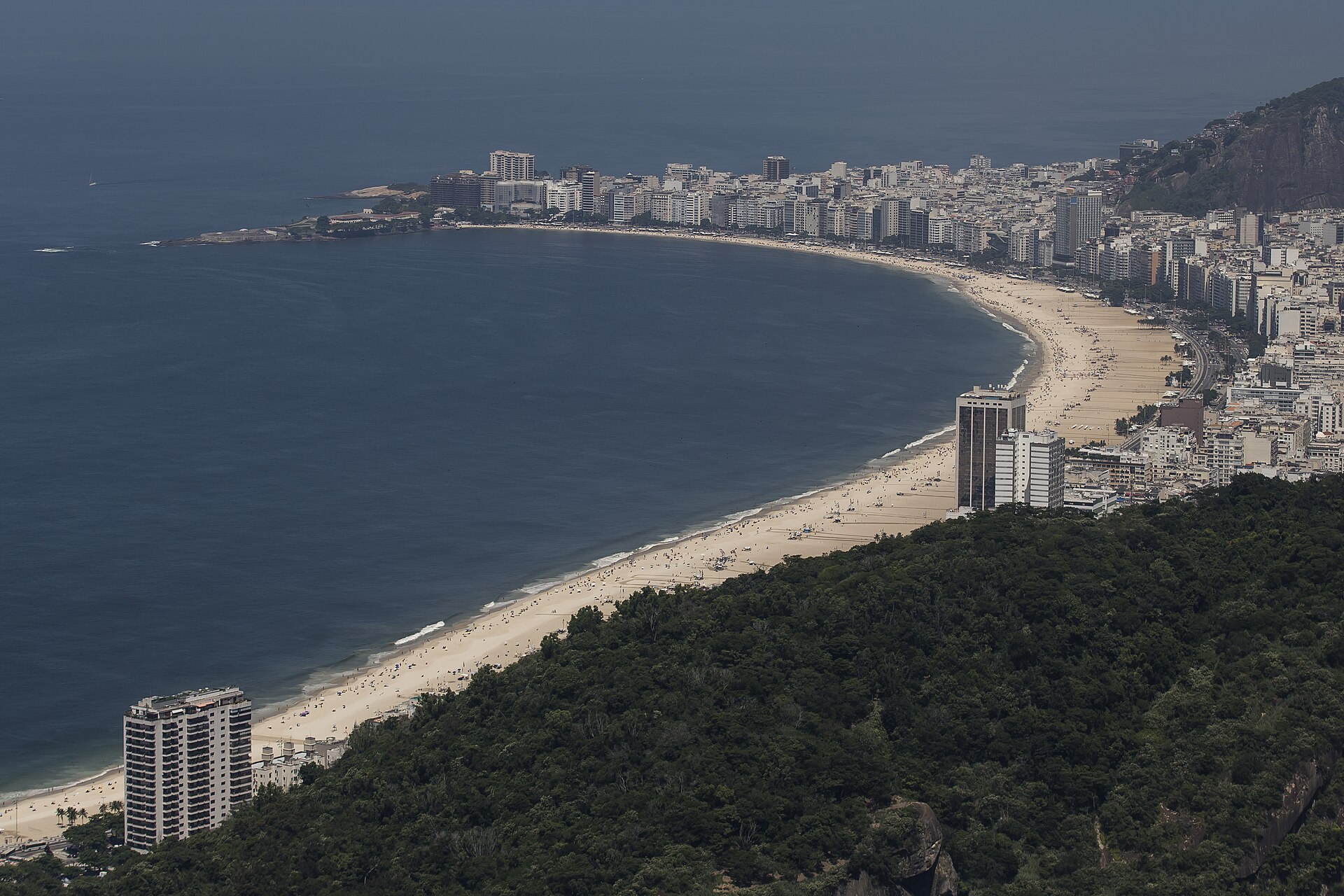
The visa is national; the experience is intensely local. A few patterns hold among foreign retirees. Florianópolis and the wider Santa Catarina coast draw people who want beaches with strong safety and healthcare. Rio de Janeiro rewards those who want city energy and ocean in the same place, at a higher cost. The interior of Minas Gerais and cities like Curitiba attract retirees prioritizing calm, climate and value over a beachfront postcard. Northeastern capitals such as Salvador and Recife pair warmth and lower costs with the North/Northeast property incentives if you later buy.
Three factors should drive the choice more than the view: healthcare access (is there a strong SUS hospital and private network nearby?), cost relative to your pension, and community and language support. Our roundup of the best cities for expats weighs these honestly, and we strongly suggest a scouting trip on a tourist entry before you file — which is one reason some retirees prefer the in-country filing route. If you're relocating specifically from the USA, the UK, or Europe, those country-specific guides cover the logistics of shipping, pets and timing the move around your filing.
Why retirees keep choosing Brazil
Strip away the brochure language and the case is straightforward:
- Your pension stretches further. A Western pension routinely goes two to three times further than at home. See real numbers in our cost of living guide.
- No capital lock-up. Unlike investor routes, retirement residence asks for income, not a property purchase or a frozen bank deposit.
- A real path forward. Permanent residence and citizenship are reachable — this isn't a visa you renew forever with nothing at the end.
- Genuine property rights. Foreigners buy urban residential property freely, with no nationality or geographic restriction, backed by a constitution-grade legal system. Rural land and the coastal/border strips carry special rules — see buying property as a foreigner.
- Free universal healthcare from day one via SUS, with private plans to fill the gaps.
The trade-offs are honest ones: bureaucracy (manageable with help) and the tax compliance described above (manageable with planning). Neither is a reason to stay away; both are reasons to set things up correctly from the start. If you're weighing Brazil against other destinations, our comparisons of Brazil vs. Portugal and Brazil vs. other Latin American options are a useful next read, along with our roundup of the best cities for expats and our honest safety guide.
An illustrative case: the Hendersons
Consider a composite of clients we see often. A British couple in their early sixties, both drawing UK state and workplace pensions totaling comfortably above the threshold, want to settle near the coast. Because the UK has a tax treaty with Brazil, their pension allocation is cleaner than an American couple's would be — but they still face Carnê-Leão reporting on income Brazil treats as foreign-source. We classify both spouses correctly (one pensioner, with the other as a dependent on the same income), sequence the apostilles so the criminal certificates don't age out, file at the consulate for a predictable timeline, and set up an accountant before their first Brazilian month closes. Eighteen months in, they register for SUS, hold a private plan they priced at 61 rather than 67, and have started Portuguese lessons with naturalization in view. Nothing about it was dramatic — which is exactly the point.
How we help
The retirement route rewards getting the boring parts right: the correct income classification, clean legalization, the right filing venue, and a tax setup that exists before the penalties would. As an OAB-licensed firm working entirely in English, we handle the document choreography, file on your behalf, and connect the immigration, tax, banking and property pieces so they don't contradict each other. If you're ready to map your pension to the right route, our process and pricing are transparent — and the first conversation is where we tell you, honestly, which door is yours. For the lifestyle side of the decision, our companion Retire in Brazil guide covers cities, costs and day-to-day life in depth.
Frequently asked questions
How much monthly income do I need for the Brazil retirement visa?
The planning figure is around US$2,000 per month in retirement or stable passive income for the main applicant, generally covering a spouse and dependents on the same income. This threshold is the least firmly pinned of Brazil's residence figures and has drifted over time, so confirm the current amount with the Brazilian consulate covering your region or directly with the Polícia Federal before you file. The money must be documented with an official institution letter plus bank statements.
Does Brazil tax my foreign pension?
Yes — once you're a Brazilian tax resident, Brazil taxes worldwide income, including the pension that qualified you. However, the 2026 reform fully exempts monthly income up to R$5,000, and credit mechanisms (or a tax treaty, if your country has one) usually prevent true double taxation. The catch is Carnê-Leão: foreign pension income must be reported and prepaid monthly via the Receita Federal e-CAC portal. Americans have no US–Brazil tax treaty and rely on the Foreign Tax Credit/FEIE while still filing US returns and FBAR/FATCA. See our expat tax guide.
Can my spouse work in Brazil on my retirement visa?
Generally yes. A spouse or stable partner included via family reunion provisions (Migration Law Art. 37) receives residence with full work rights, even though the visa was built on your pension rather than their employment. Confirm the documentation each consulate wants for dependents, since local practice varies. See our residency by marriage guide for the family-tie routes.
Do I have to buy property to retire in Brazil?
No. The retirement (pensioner/rentista) route is based on income, not assets — there's no requirement to buy property or lock capital in a Brazilian bank. If you want residence via property, that's a different route entirely: the real-estate investor visa requires R$1,000,000 in urban property (R$700,000 in the North/Northeast). Foreigners can buy urban residential property freely with no nationality restriction regardless of which visa they hold.
Does the retirement visa lead to permanent residence and citizenship?
Yes. Provided you keep meeting the conditions, the residence renews and converts toward permanent status, and the time counts toward naturalization. Standard Brazilian citizenship requires 4 years of lawful residence, Portuguese ability and a clean record — dropping to 1 year if you're married to a Brazilian, are the parent of a Brazilian child, or hold CPLP nationality. Brazil permits dual citizenship, so you don't renounce your original nationality. Details in our naturalization guide.
Can I get healthcare in Brazil as a foreign retiree?
Yes. The public system, SUS, is free and universal to everyone on Brazilian soil — including foreign residents — with no waiting period. You register with your CPF and usually your CRNM. Because quality and wait times vary by city, most foreign retirees also carry a private plano de saúde. Since premiums rise steeply with the age at enrollment, price a plan before you move. See our healthcare guide.