Brazil's digital nomad visa lets you live in Rio, Florianópolis, or São Paulo for up to two years while you keep working for clients and employers back home. The rules are refreshingly simple on paper: prove about US$1,500 a month in foreign income (or US$18,000 in the bank), and you are most of the way there. The catch is in the sequencing, the paperwork, and what happens to your taxes once you cross 183 days. This guide walks through all of it, plainly, from a firm that files these applications.
What the digital nomad visa actually is
Brazil created the VITEM XIV visa in January 2022 under Resolução CNIg/MJSP nº 45/2021. It is a temporary residence permit designed for one specific situation: you work remotely, and the money comes from outside Brazil. An American software engineer paid by a US company, a British copywriter invoicing London clients, a Portuguese consultant serving European customers — these are the textbook cases.
It grants one year of residence, renewable once, for a maximum of two years on this status. During that time you are a legal resident: you get a CPF (Brazil's taxpayer ID), you can open a bank account, sign a long-term lease, register a SIM card, and use the public health system. You are not a tourist counting days until you have to leave the country.
What it is not: it is not a work permit for the Brazilian labor market, and it is not a fast track to citizenship. We will come back to both points, because both are where people get tripped up.
Who qualifies
The eligibility test has three parts, and you need all three.
1. You work remotely for non-Brazilian payers
You are either an employee of a foreign company or a freelancer/contractor whose clients are abroad. The defining feature is that you can do your job from anywhere with a laptop and Wi-Fi, and nobody paying you is in Brazil. A salaried remote employee qualifies. A freelance designer with clients in three countries qualifies. A retiree living off a pension does not qualify under this visa — that is a different route, covered in our retirement visa guide.
2. You meet the income or savings threshold
You need to show either:
- Monthly income of at least US$1,500 (roughly R$7,800 at ~R$5.2/US$, approx), or
- Available bank funds of at least US$18,000 (roughly R$93,600, approx).
These are the figures set in the founding resolution, and they have held steady. You can satisfy the test with income alone, savings alone, or — in practice — a combination that clearly demonstrates you can support yourself. A common point of confusion: there is a widely-repeated claim online that you need an extra US$60 per dependent. That figure is not in the official resolution, and we do not state it as a requirement. Bring your dependents' documents and budget for their support, but do not treat the US$60 number as a published rule.
3. You can document it — not just promise it
Brazilian immigration runs on paper, and the paper has to match. An employment contract or service agreements, a signed declaration describing your remote arrangement, and bank statements that actually show the money arriving. The mismatch between what people claim and what their statements show is the single most common reason these files stall.
The two ways to apply
This is the decision most applicants do not know they are making. There are two lawful routes, and they suit different people.
Route one: apply at the consulate (before you arrive)
You apply at the Brazilian consulate that serves your home jurisdiction, receive the VITEM XIV visa stamped in your passport, then fly to Brazil and register with the Federal Police for your residence card. This is the cleaner path for most first-time applicants. Consulates publish their document checklists, processing happens before you uproot your life, and English-language documents are often accepted without sworn translation. If your application has a problem, you find out while you are still home — not while you are sitting in Brazil on visitor status with a clock running.
Route two: apply from inside Brazil
You enter Brazil as a visitor (on the e-visa or visa-free entry, depending on your nationality), then apply for residence on digital-nomad grounds directly at the Polícia Federal. This is fully lawful and it works. But the standards are stricter: foreign documents need apostilles and sworn (juramentada) translations into Portuguese, processing time varies by office, and any mistake is harder to fix when you are already in the country. People who choose this route and underestimate the translation requirements are the ones who end up scrambling.
| Factor | Consulate route | In-country route |
|---|---|---|
| Where you apply | Brazilian consulate in your home country | Polícia Federal inside Brazil |
| When | Before you move | After you arrive as a visitor |
| English documents | Often accepted | Usually require sworn Portuguese translation |
| If something is wrong | You fix it from home | You fix it on a ticking visitor clock |
| Best for | Most first-time applicants | People already in Brazil with documents ready |
Pick your route before you book the flight, not after you land.
Documents you'll need
Exact checklists vary by consulate and by Federal Police office, but nearly every application includes the following. Use this as your starting checklist:
- Valid passport (with adequate validity remaining and blank pages)
- Completed visa application form and passport-spec photos
- Proof of remote employment or service relationships — employment contract, or service agreements with foreign clients
- A declaration stating you work remotely for non-Brazilian payers
- Income evidence — typically the last 3 months of bank statements, and/or proof of US$18,000 in available funds
- Criminal background certificate from your country of residence, apostilled (most are valid only ~90 days — gather this last)
- Health insurance valid in Brazil for the period of stay
- Sworn (juramentada) translations of any non-Portuguese document, for in-country filings (consulates often waive this for English)
The application process, step by step
Here is how a typical consulate-route application unfolds. Timelines vary, but the order rarely does.
Confirm eligibility and route
Verify your income/savings meet the current threshold and decide between the consulate and in-country routes. For most people moving fresh, the consulate route wins.
Assemble documents (everything but the criminal record)
Contracts, bank statements, the remote-work declaration, health insurance, photos, forms. Get apostilles where required.
Pull and apostille your criminal record
Do this last so it stays inside its validity window. Apostille it in the issuing country.
File at the consulate
Submit the package, pay the visa fee, and wait for the VITEM XIV to be issued in your passport. Processing time depends on the post.
Enter Brazil
Travel on your new visa. The clock for in-country registration starts on entry.
Register with the Federal Police within 90 days
Book your Polícia Federal appointment, pay the fees, and collect your CRNM residence card. Miss the 90-day window and you create avoidable problems.
Settle in: CPF, bank, lease
With residence secured, get your CPF if you do not already have one, open a bank account, and sign a lease.
Costs: what you'll actually pay
The government fees for this visa are modest by international standards. The real money is in the supporting requirements — health insurance, translations, apostilles — and in your cost of living once you arrive.
Beyond the headline figures, budget for the consular visa fee (varies by post and nationality), apostille fees in your home country, sworn translation costs if filing in-country, and a health-insurance policy valid in Brazil. For a sense of monthly living costs once you land, see our cost of living guide.
What the visa lets you do — and what it doesn't
Being honest about the boundaries saves people from expensive surprises.
What it gives you
- Lawful residence for up to two years
- A CPF and the ability to function in the real economy — bank account, lease, utilities, phone plan
- Access to SUS, Brazil's free public health system (most expats also carry a private plano de saúde) — see healthcare in Brazil
- The right to bring dependents (spouse/partner and children) on accompanying status
What it does not give you
- The right to work for Brazilian payers. Your income must stay foreign-sourced.
- Automatic permanent residence. It is capped at two years and does not convert on its own.
- A clean run at citizenship. Time spent on a digital nomad visa generally does not count toward the four-year ordinary naturalization clock the way permanent residence does. If citizenship is your long game, you will likely want to transition to a residence category that does count — for example, an investment visa, family reunion, or a route covered in our naturalization guide.
The 183-day tax question (read this before you book)
This is the part most digital nomads ignore until it is a problem. The visa does not, by itself, make you a Brazilian tax resident on day one. But Brazil's 183-day rule does the work instead.
Once you have been physically present in Brazil for more than 183 days — consecutive or not — within any rolling 12-month period, you become a Brazilian tax resident. And Brazilian tax residents are taxed on their worldwide income, on a progressive scale with a top marginal rate of 27.5%. For a digital nomad whose whole point is staying a year or two, you will almost certainly cross that line.
The 2026 IRPF reform — what changed
There is genuinely good news for 2026. Under Lei 15.270/2025, effective 1 January 2026, the income tax brackets were reworked in favor of lower and middle earners:
- Monthly income up to R$5,000 is fully exempt — this is the headline 2026 number.
- Partial relief extends up to about R$7,350/month.
- Annual full exemption up to R$60,000.
- A new minimum tax on high earners, plus 10% withholding on monthly dividends over R$50,000 from a single entity.
For a nomad earning the US$1,500/month minimum (~R$7,800), that means a meaningful chunk of your income sits inside the exempt and partial-relief bands. Higher earners will owe more, up to the 27.5% top rate.
Carnê-Leão: the monthly filing nobody warns you about
Here is a trap specific to foreign-source income. Because your money comes from abroad and is not withheld at a Brazilian source, you generally must report and prepay it monthly through the Carnê-Leão system on the Receita Federal's e-CAC portal. This is not the same as the annual return — it is an ongoing monthly obligation, and falling behind generates penalties. Build it into your routine from month one.
The takeaway: the digital nomad visa is an immigration decision with a tax consequence, and the two are often handled by different people who never talk to each other. Plan both before you cross 183 days, not after. See our broader expat taxes in Brazil overview.
How the digital nomad visa compares to other Brazilian residence routes
The VITEM XIV is the right tool for active remote workers. But it is one of several residence categories, and if your situation is slightly different, another route may fit better — or count toward citizenship where this one does not.
| Route | Core requirement | Term | Best for |
|---|---|---|---|
| Digital nomad (VITEM XIV) | US$1,500/mo foreign income or US$18,000 savings | 1 yr + 1 renewal | Active remote workers |
| Retirement / rentista | ~US$2,000/mo passive income (confirm) | Renewable residence | Pensioners, passive-income holders |
| Investor — real estate | R$1,000,000 urban property (R$700,000 in North/Northeast) | 4 yrs, renewable | Property investors seeking residence |
| Investor — company | R$500,000 (R$150,000 for innovation/startup) | Renewable | Founders, business investors |
| Family reunion / marriage | Brazilian spouse, partner, or child | Up to 1 yr, then permanent | Binational families — full work rights |
| Mercosur (VITEM XIII) | Nationality of a Mercosur/associated state | 2 yrs, then permanent | Argentines, Colombians, Chileans, etc. |
A few of these — notably family reunion and the investor routes — grant residence that does count toward naturalization and carries full work rights. If your goals are bigger than two years of remote work, weigh them honestly. Our Brazil vs. Portugal comparison and Brazil vs. other Latin America pieces help if you are still choosing a country.
Choosing a city: where Brazilian nomads actually land
The visa is national — it does not tie you to one place — but where you base yourself shapes the whole experience: cost, climate, safety, internet, and how easy daily errands are without fluent Portuguese. A few honest patterns from people who have done it.
Florianópolis
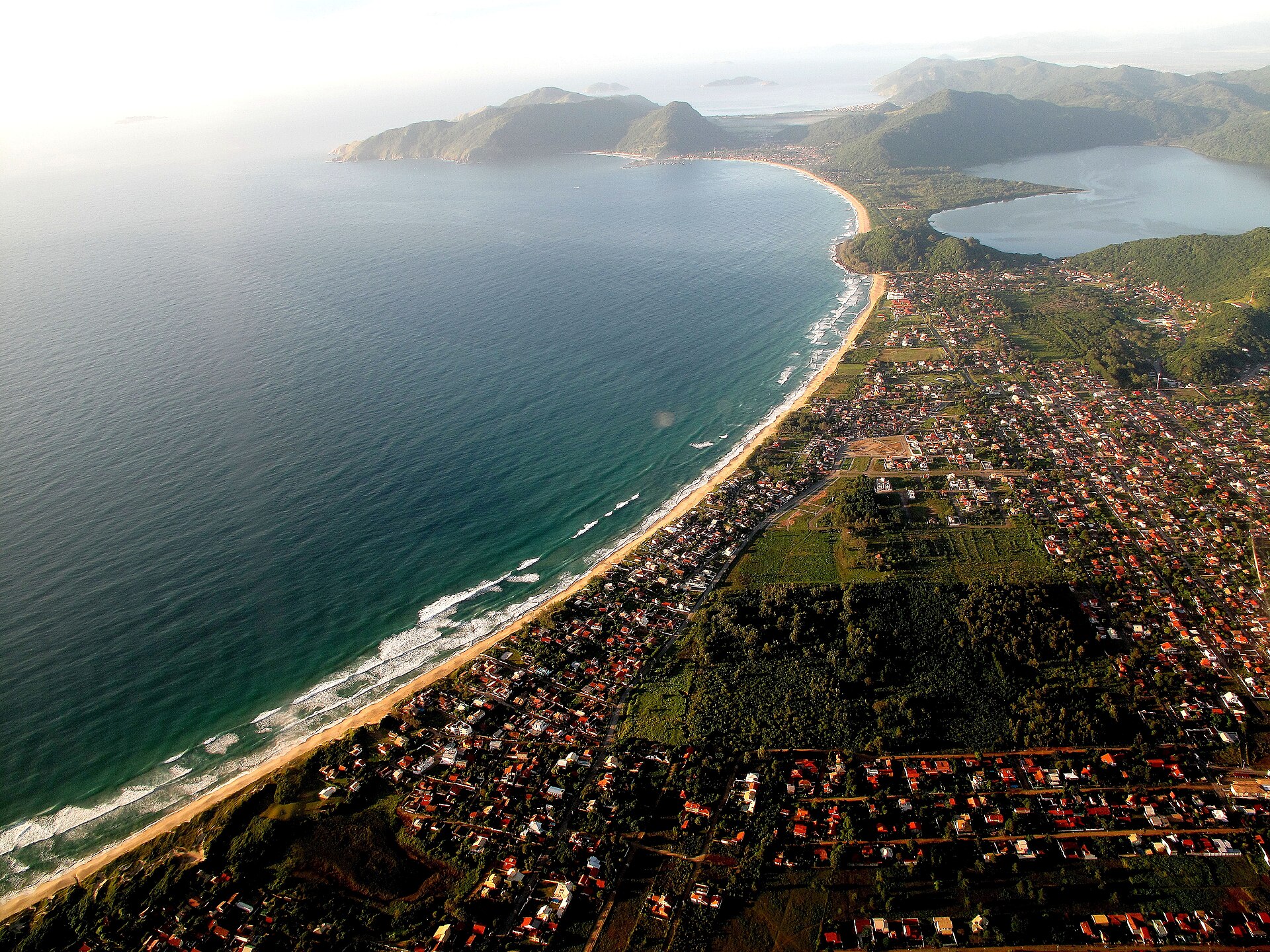
The island city in the south is the most-cited nomad favorite: beaches, a high quality of life, strong internet, and a real expat and startup community. Winters are cooler than the rest of Brazil, which some people love and others underestimate. It is not the cheapest option, but it is among the most livable.
Rio de Janeiro
Unbeatable scenery, a deep cultural life, and neighborhoods like Botafogo and Ipanema that are genuinely walkable and coworking-rich. The trade-off is the one everyone knows: you have to be street-smart about safety, and rents in the prime zones are not cheap. Many nomads love a stint in Rio and then base somewhere calmer.
São Paulo
If you want the most jobs-adjacent, business-dense, restaurant-rich city in South America, this is it. The best professional networking, the best flight connections, and a grayer, more functional vibe than the beach cities. Less of a postcard, more of a place that actually works.
Curitiba, Belo Horizonte, and the smaller options
Curitiba is clean, orderly, and easier to navigate than the megacities; Belo Horizonte offers warmth, food, and a lower cost of living. Smaller coastal towns appeal to people who already speak some Portuguese. The honest filter: the smaller and more local you go, the more Portuguese you need and the thinner the expat support network gets.
For a full breakdown with costs and connectivity, see our guides to the best cities for digital nomads and the broader best cities for expats. And because safety is the question every newcomer asks, read our honest safety guide rather than the headlines.

Moving from a specific country
Your home country changes the details — which documents you apostille, whether you have a tax treaty with Brazil, and how your driving license transfers. Three quick orientations:
- From the United States. No US–Brazil tax treaty, so you lean on the Foreign Tax Credit and FEIE and keep filing US returns plus FBAR/FATCA. US licenses are exempt from the Brazilian driving test. Start with moving to Brazil from the USA.
- From the United Kingdom. The UK does have a tax arrangement that changes the double-taxation math, and British documents follow the apostille process. See moving from the UK.
- From the EU. Portugal, France, Germany, and Spain all have treaty relationships with Brazil and driving-test exemptions; the cultural bridge from Portugal is obviously the smoothest. See moving from Europe.
If you hold the nationality of a Mercosur or associated country — Argentina, Bolivia, Chile, Colombia, Ecuador, Paraguay, Peru, or Uruguay — you may not even need the digital nomad visa. The Mercosur residence route (VITEM XIII) is simpler, needs no prior consular visa, and leads to permanent residence after two years.
Bringing your family
You can include dependents — typically your spouse or stable partner and your children — on accompanying status tied to your visa. They register with the Federal Police alongside you and obtain their own CRNM cards. Remember: the official income threshold is the US$1,500/month or US$18,000 figure, and the much-repeated +US$60/dependent number is not in the resolution. Plan for the real cost of supporting your family in Brazil rather than a fictitious per-dependent surcharge.
If a family member is a Brazilian citizen — or if you marry one during your stay — your options expand dramatically. Marriage to a Brazilian opens a path to permanent residence and, after just one year of residence, reduced-timeline naturalization. See citizenship by marriage and getting married in Brazil. Families relocating with school-age children should also read our note on international schools.
Settling in: the practical first 90 days
The visa is the legal foundation, but daily life in Brazil runs on a few practical building blocks. Get these in place early.
- CPF. You need it for almost everything — bank, lease, SIM card, investments. It is free or near-free, obtainable even before you arrive, and a CPF is not the same as tax residency. Start with our CPF for foreigners guide.
- Bank account. With your CPF and CRNM, you can open a resident account; digital banks like Nubank, C6, and Inter are popular and English-friendlier than legacy banks. Details in opening a bank account.
- Healthcare. SUS is free and universal to everyone on Brazilian soil, with no waiting period, but most expats also buy a private plan. See healthcare for foreigners.
- Driving. Your foreign license is valid for up to 180 days after you establish residence (carry your passport and an International Driving Permit); after that, exchange it for a Brazilian CNH. Many nationalities (US, Portugal, France, Germany, Spain) are exempt from the driving test, though a medical/psych exam is required. See driving in Brazil.
- Housing. Long-term leases are very doable as a foreign resident, though guarantor requirements can be a hurdle — our guide on renting as a foreigner covers the workarounds.
- Language. English gets you surprisingly far in the big cities, but Portuguese transforms the experience and is essential if you ever pursue citizenship. See learning Portuguese.
Where applications go wrong
Across the files we handle, the same three failure patterns recur — and all three are preventable with planning.
- Income documentation that does not match the threshold cleanly. This is the big one. Irregular freelance income presented as a messy pile of statements, or income that dips below US$1,500 in one of the three months shown, raises questions you do not want to answer mid-application. Present your income with structure, and if it is lumpy, lean on the US$18,000 savings alternative.
- Criminal certificates that expire before filing. Most are valid only ~90 days. People pull them first, then spend two months gathering everything else, and the certificate goes stale. Pull it last.
- The in-country route stalling on sworn translations. Applicants enter as tourists, start the Polícia Federal route, and only then discover that every foreign document needs an apostille and a juramentada translation — work they did not budget time for, now racing a visitor clock. If you are going to file in-country, get translations done before you arrive.
How we help
Brazil Legal Shield is an English-speaking, OAB-licensed Brazilian law firm built for foreigners. For the digital nomad visa, we confirm your eligibility against the current resolution, tell you honestly which route fits, assemble and pre-check your document package so nothing expires or fails to match, handle the apostille and sworn-translation logistics, and coordinate your Federal Police registration and CRNM card. Because we also run tax and banking practices, we flag the 183-day tax consequence and the Carnê-Leão obligation up front — not after you have a penalty.
If you are weighing this against other paths, or planning beyond two years, talk to our immigration team. See how it works, our pricing, or get in touch for a straight answer on your specific situation. And if you are still deciding where in Brazil to base yourself, our guide to the best cities for digital nomads is a good next read.
Frequently asked questions
How much income do I need for Brazil's digital nomad visa?
You need to show either monthly income of at least US$1,500 (about R$7,800, approx) or available bank funds of at least US$18,000 (about R$93,600, approx), under Resolução CNIg/MJSP nº 45/2021. You can also combine income and savings to demonstrate you can support yourself. The widely-repeated "+US$60 per dependent" figure is not in the official resolution. Confirm the current threshold with the consulate or Federal Police before you file, since resolutions get amended.
How long does the digital nomad visa last, and can I renew it?
It grants one year of temporary residence, renewable once, for a maximum of two years on this status. It does not automatically convert to permanent residence. If you want to stay longer, plan your next visa — such as investment, family reunion, or marriage to a Brazilian — before this one expires.
Will I have to pay Brazilian tax on the visa?
Probably, yes. Once you spend more than 183 days in Brazil within any rolling 12-month period, you become a Brazilian tax resident and are taxed on your worldwide income (progressive scale, top rate 27.5%). Under the 2026 IRPF reform, monthly income up to R$5,000 is fully exempt, with partial relief to about R$7,350/month. Foreign-source income is generally reported and prepaid monthly via Carnê-Leão. Americans should note there is no US–Brazil tax treaty — see our double taxation guide — and should still file US returns plus FBAR/FATCA.
Can I work for Brazilian companies on this visa?
No. The digital nomad visa is specifically for income from outside Brazil. If you want to work for a Brazilian employer or bill Brazilian clients, you need a different status — see our work visa and permit guide.
Should I apply at the consulate or inside Brazil?
For most first-time applicants, the consulate route is cleaner: you apply before you move, consulates publish their checklists, and English documents are often accepted without sworn translation. The in-country route at the Polícia Federal is lawful and works, but every foreign document needs an apostille and a sworn (juramentada) Portuguese translation, and any mistake is harder to fix while you are on a visitor clock. Choose your route before you book the flight.
Does time on the digital nomad visa count toward citizenship?
Generally not in the same way permanent residence does. Ordinary naturalization requires four years of lawful residence (reduced to one year for spouses of Brazilians, parents of a Brazilian child, or CPLP nationals), plus Portuguese ability and a clean record. Time on a digital nomad visa typically does not build that clock the way a permanent-residence category would. If citizenship is your goal, plan to transition to a qualifying route — see our naturalization guide.