Brazil quietly became one of the best places on earth to work remotely: fast fiber, a real digital-nomad visa, a friendly time zone for US and European clients, and a cost of living that still buys a beach and a balcony for less than a studio back home. The hard part is not whether to come — it is which city, and how to do it legally without tripping the 183-day tax wire.
We are an English-speaking, OAB-licensed Brazilian law firm that helps foreigners move, work and stay legal here. So this is not a travel-blog listicle that stops at "great cafés and vibes." We rank the cities nomads actually base in on the four things that decide whether remote work survives contact with Brazil — internet, cost, community and the legal/tax reality — and we tell you honestly where each city will frustrate you. Read it alongside our companion best cities for expats guide and the digital nomad visa walkthrough, and you will have the whole picture.
How we ranked Brazil's best digital-nomad cities
There is no single "best" city, only the best fit for how you work and live. We scored each on four things that matter to a remote earner, then wrote down where it genuinely shines and where it will annoy you.
- Internet & workspace — fiber availability and real-world speeds, density of coworking spaces and laptop-friendly cafés, and how reliable the connection is when you have a 9am call with a client eight time zones away.
- Cost of living — what a furnished one-bedroom in a nomad-friendly neighborhood actually rents for, plus the hidden condomínio (building fee) that can add 20–50% on top of rent.
- Community & integration — how easy it is to find other foreigners, coworking events, sports and meetups versus how much you will lean on Portuguese and Brazilian friendships.
- Lifestyle & safety — climate, beaches versus culture, and how safe a careful resident in the right neighborhood actually feels day to day.
One thing to fix in your head before the rankings: your visa and your tax exposure travel with you, not with the city. Whether you base in Floripa or Rio, the same digital-nomad visa thresholds and the same 183-day tax rule apply. We cover both in their own sections below, because they decide more about your year in Brazil than the WiFi speed ever will.
The ranked shortlist at a glance
Here is the quick version. Each city gets a full breakdown below, but if you only want the headline trade-offs, start here. Rents are realistic ranges for a furnished or well-located one-bedroom in a neighborhood nomads actually choose; add the condomínio on top.
| City | Best for | Internet | 1-bed, good area (approx/mo) | Watch-outs |
|---|---|---|---|---|
| Florianópolis | The all-round nomad default | Excellent fiber | R$3,000–5,500 (US$580–1,060) | Summer crowds; island traffic |
| Rio de Janeiro | Lifestyle, beach, big community | Good in Zona Sul | R$4,500–8,000 (US$870–1,540) | Safety varies block to block |
| São Paulo | Serious work, networks, infra | Best in country | R$4,500–8,000 (US$870–1,540) | Cost, traffic, no beach |
| Belo Horizonte | Value, food, underrated tech | Strong fiber | R$2,500–4,500 (US$480–870) | Smaller foreign scene; landlocked |
| Curitiba | Order, safety, low cost | Reliable fiber | R$2,500–4,500 (US$480–870) | Cold, grey winters; quieter |
| Salvador / NE coast | Beach budget living | Variable | R$1,800–4,000 (US$350–770) | Safety; thinner infrastructure |
USD conversions use roughly R$5.2 per US$1 (approx — check the day's rate, the real moves). The cost of living guide breaks the full monthly budget down line by line.
1. Florianópolis — the remote worker's default
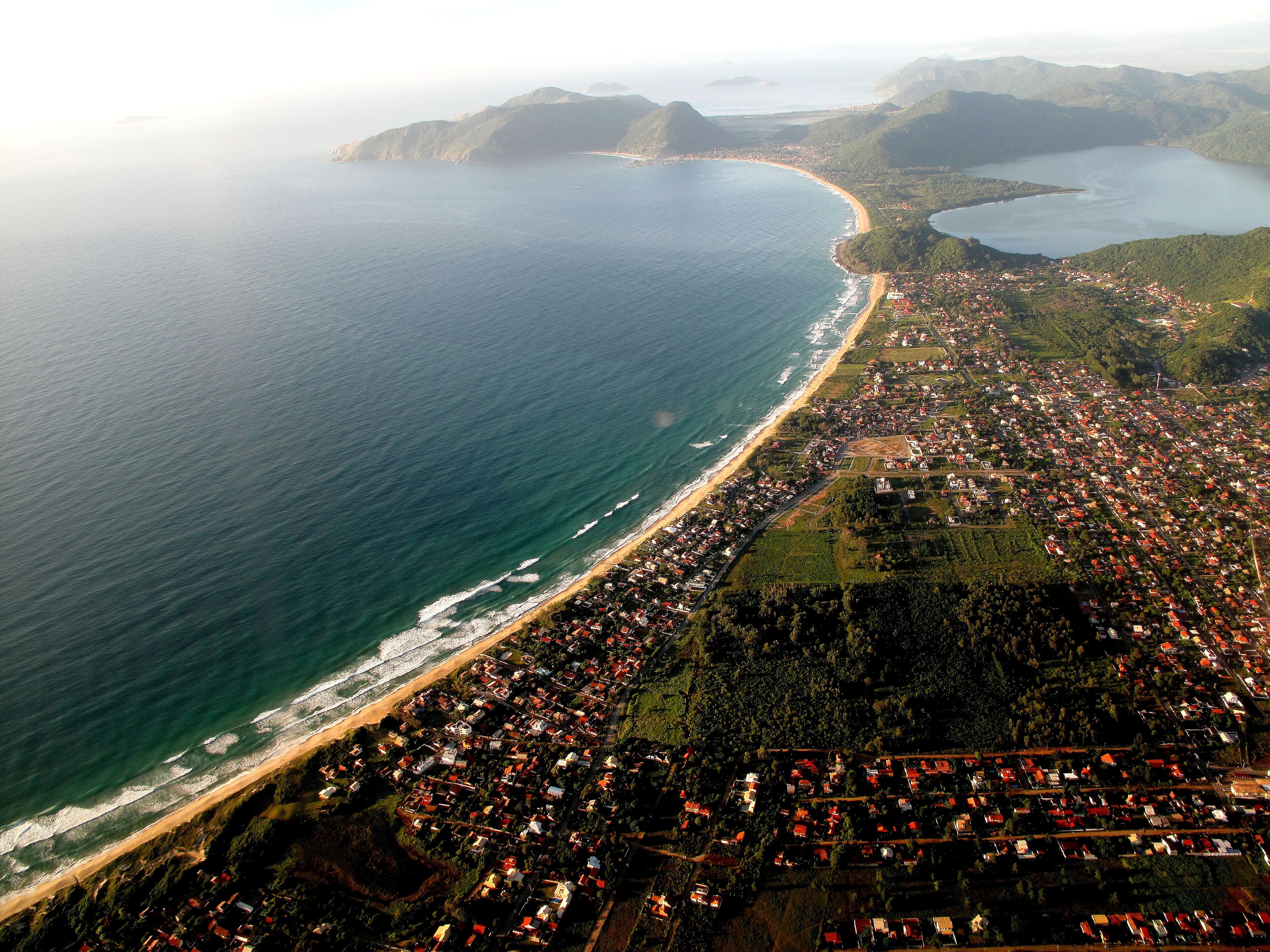
If you work remotely and want a sane, safe, good-looking base, "Floripa" is where a lot of nomads land and never leave. It is an island city in the south (Santa Catarina state) with more than 40 beaches, a genuine startup and tech scene, clean infrastructure, and the consistently lowest violence among Brazil's major destinations. It feels manageable in a way the megacities do not.
Internet & workspace: This is Floripa's killer feature. Fiber is widespread and real-world speeds commonly land around 200–260 Mbps, with home plans starting near R$100/month. Coworking is everywhere — Impact Hub, We Cowork and others — at roughly R$300–800/month (about US$60–155) for a membership, or day passes if you are just testing the water. The time zone (UTC−3) overlaps a usable chunk of both the US and European working day.
Cost & lifestyle: Cheaper than Rio or São Paulo, though no longer cheap — demand from Brazilians and foreigners has pushed central rents up. Most nomads run a comfortable month in the US$800–1,500 range all-in. The payoff is real quality of life: beaches, hiking, surfing, a calm pace and a ready-made foreign community.
Community: Among the easiest in Brazil to plug into. Coworking events, surf crowds, run clubs and nomad WhatsApp groups get you connected within weeks, and Lagoa da Conceição is effectively the social hub.
Watch-outs: Summer (Dec–Feb) brings heavy domestic tourism and traffic that chokes the island's few bridges. Winters are mild but can be grey and wet. It is quieter than the megacities — a feature if you want focus, a drawback if you crave big-city nightlife.
Neighborhood shortlist:
- Lagoa da Conceição — lagoon-side, social, the classic nomad base.
- Campeche — beachy, family-friendly, lots of newer apartments and cafés.
- Centro / Trindade — walkable, urban, close to services and the university.
- Jurerê Internacional — upscale, polished, beach-club energy; pricier.
2. Rio de Janeiro — lifestyle and the biggest community
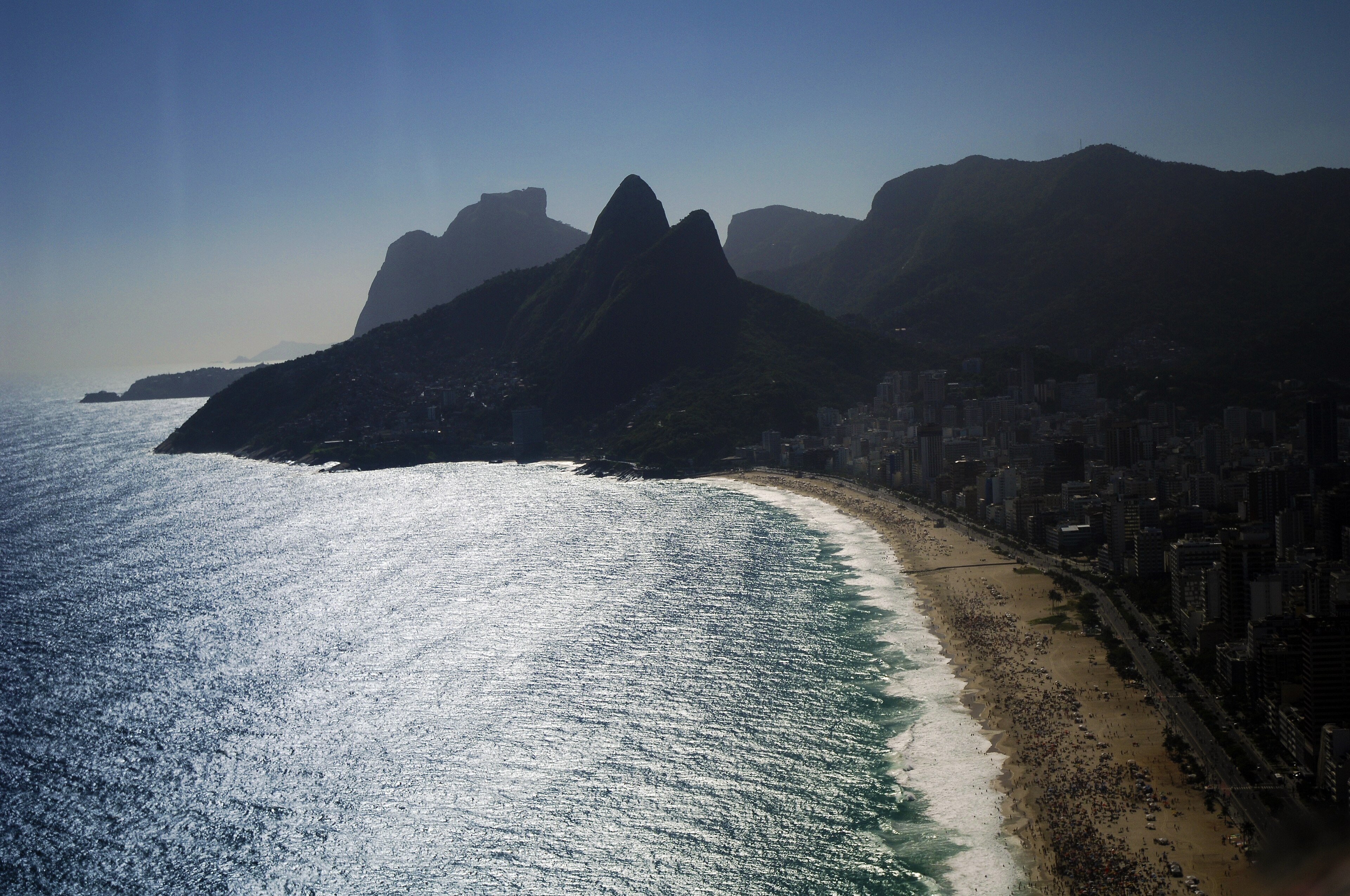
Nobody moves to Rio for the bureaucracy. They come for the beaches, the mountains rising out of the sea, the music and the easy outdoor life — and a remote-work community that has grown fast, especially in the South Zone (Zona Sul). For lifestyle, few cities anywhere compete. The honest caveat: safety in Rio is more location-dependent than anywhere else on this list, so the neighborhood you choose matters more than the city itself.
Internet & workspace: Solid in the neighborhoods nomads actually use. Zona Sul and Barra have widespread fiber, plenty of coworking (from global chains to local spots) and a deep bench of laptop-friendly cafés. Expect a few more outages and more variability than Floripa or São Paulo, so a 4G/5G backup SIM earns its keep on call-heavy days.
Cost & lifestyle: Prime beachfront in Ipanema or Leblon is genuinely expensive, but step a few blocks inland or into Botafogo and Flamengo and prices drop sharply. The lifestyle dividend — beach, hiking, year-round outdoor social life — is unmatched.
Community: The largest and easiest-to-find foreign and nomad scene in Brazil after São Paulo. If you want a ready-made social life from week one, Rio delivers.
Watch-outs: Safety is the real one. The right neighborhood is wonderful; the wrong street is not. Stick to well-regarded areas, keep your phone discreet, and use Uber/99 at night. Our honest safety guide covers Rio specifically.
Neighborhood shortlist:
- Ipanema / Leblon — prime, safest-feeling beach neighborhoods; premium prices.
- Botafogo / Flamengo — central, well-connected, better value, fast-improving and full of cafés.
- Copacabana — iconic and central; quality varies block to block, so visit before signing.
- Barra da Tijuca — modern, gated, car-centric, family-oriented; feels more suburban.
3. São Paulo — the serious base with the best infrastructure
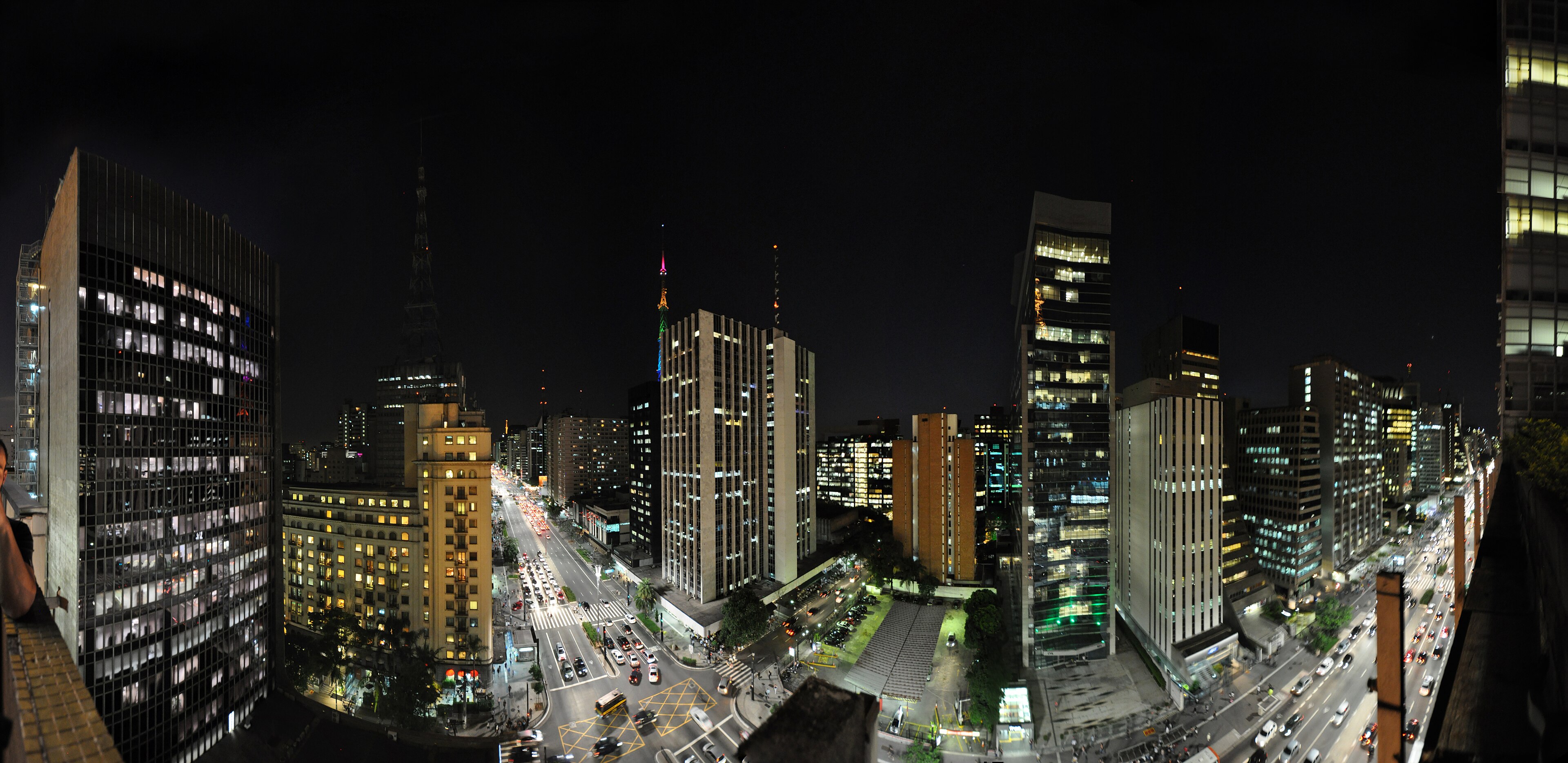
São Paulo ("Sampa") is the financial and corporate heart of Latin America, and for a certain kind of nomad it is the obvious base. If your remote work touches Brazilian clients, you want to network, raise money, or you simply value world-class infrastructure over a beach, this is the city. It has the deepest professional networks, the best restaurants on the continent, the strongest hospitals, and a cultural calendar that never stops.
Internet & workspace: The best in Brazil — simply the most reliable, fastest and most redundant connectivity in the country, with the densest coworking market (every major chain plus countless independents). If your work cannot tolerate a dropped call, São Paulo is the safest bet.
Cost & lifestyle: The most expensive Brazilian city for a comparable lifestyle, but it is enormous, so you can dial costs up or down dramatically. The upside is that everything is here; the downside is traffic, sprawl and no coastline. Weekends often mean driving to the coast or the interior.
Community: The largest foreign professional community in Brazil, heavy on entrepreneurs, tech workers and corporate transferees. If you plan to open a company (LTDA) or move from remote work into something local, this is where the gravity is.
Neighborhood shortlist:
- Pinheiros / Vila Madalena — creative, walkable, cafés and bars; the nomad-favorite combination.
- Itaim Bibi / Vila Olímpia — finance and tech hub, lively after work, lots of coworking.
- Jardins — leafy, central, upscale; the classic expat default.
- Vila Mariana — calmer, well-connected by metro, better value.
4. Belo Horizonte — the underrated value pick
Belo Horizonte ("BH"), the capital of Minas Gerais, rarely makes glossy nomad lists and that is exactly its appeal. It is a large, friendly, food-obsessed city with a quietly strong tech and startup scene (the "San Pedro Valley" cluster), solid fiber, noticeably lower costs than the coastal big three, and some of the warmest hospitality in Brazil. You trade the beach for a lot more apartment and a lot more change in your pocket.
Internet & workspace: Better than its reputation. Fiber is widely available, coworking has grown alongside the startup scene, and the cost of a good connection is low. For a remote worker who does not need a coastline, BH punches above its weight.
Cost & lifestyle: This is the headline. Rents and daily costs run well below Rio and São Paulo, so the same budget buys a markedly higher standard of living. Minas is famous nationwide for its food, its botecos (neighborhood bars) and an unhurried social warmth that makes integration easy. The city is also the gateway to the historic towns of Minas — Ouro Preto, Tiradentes — for weekends.
Community: Smaller and more dispersed foreign scene than Floripa, Rio or São Paulo, which pushes you toward Brazilian friendships and Portuguese sooner. For many nomads that is a feature, not a bug.
Watch-out: It is landlocked and the foreigner network is thinner, so if a ready-made expat bubble or beach access is non-negotiable, BH may feel quiet. If value, food and authenticity rank higher, it is one of the best deals in the country.
Neighborhood shortlist: Savassi and Lourdes (central, upscale, walkable, full of cafés and restaurants), Funcionários (convenient, well-located), and Belvedere for newer towers and a quieter, planned feel.
The right city gets you 80% of the way; the right neighborhood and a clean visa get you the rest.
5. Curitiba — order, safety and low cost

Curitiba is the quiet over-performer. The capital of Paraná in the south, it is famous in Brazil for urban planning, clean public transport, green space and a sense of order that surprises first-time visitors. It is noticeably safer and cheaper than the big three, which makes it a strong pick for nomads who value calm and value over nightlife and beaches — and for families.
Internet & workspace: Reliable fiber and a respectable, if smaller, coworking market. The connectivity is not the bottleneck; the smaller foreign community is.
Cost & safety: Among the best value of any major city here, with lower rents and a calmer feel. Crime runs lower than the national average for a city its size — for a heads-down remote worker who wants infrastructure without megacity stress, it is hard to beat.
Watch-out: The climate. Curitiba sits on a plateau and gets genuinely cold, grey and damp in winter — if you are chasing tropical Brazil, this is not it. The expat scene is also smaller and more dispersed, so you will lean harder on Portuguese and Brazilian friendships than on a ready-made foreigner network.
Neighborhood shortlist: Batel (upscale, restaurants), Água Verde (central, convenient), Cabral and Juveve (residential, family-friendly), and Ecoville for newer towers and a planned, gated feel.
6. Salvador & the Northeast — beach budget living
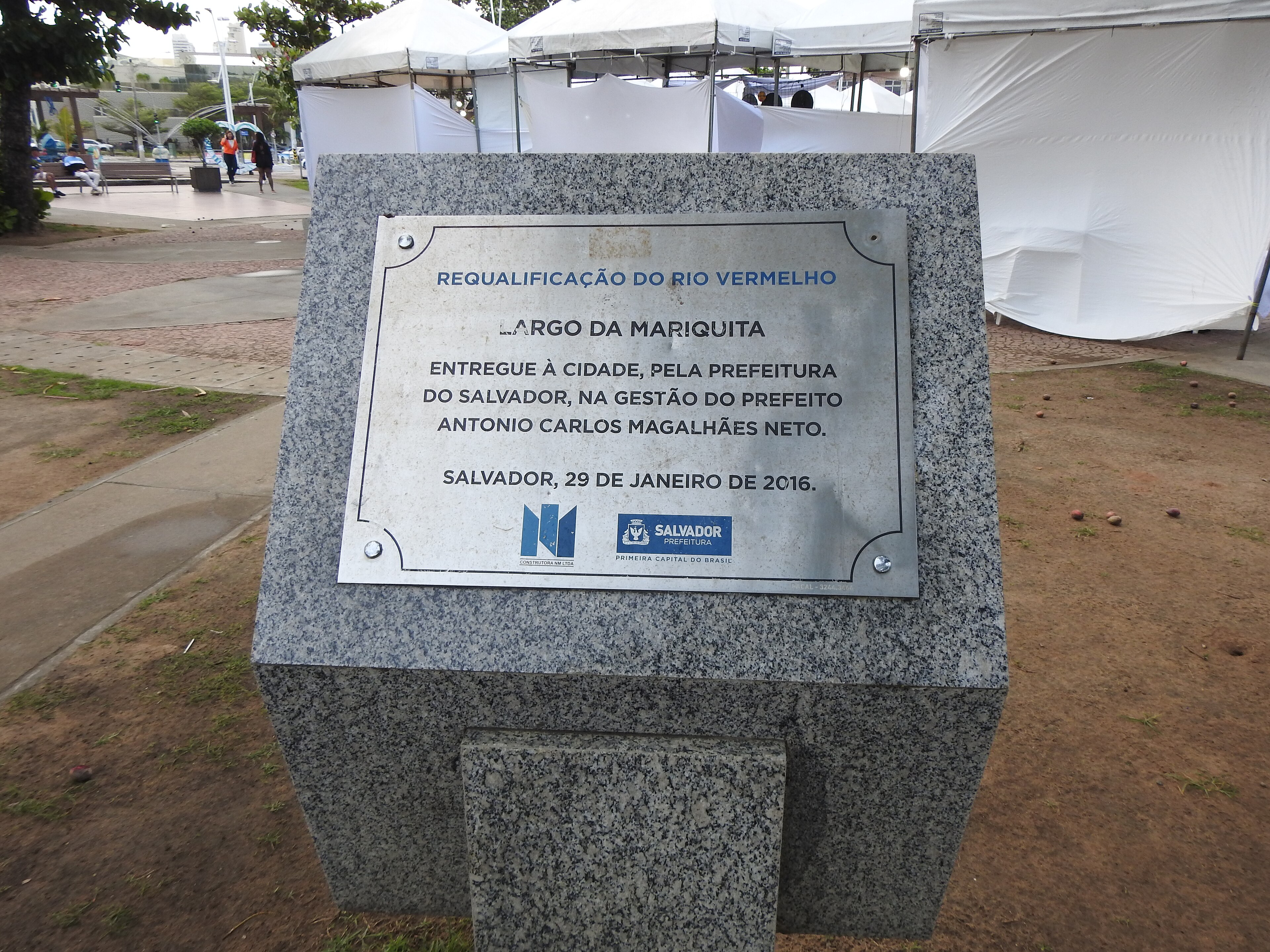
If your priority is warm weather, beaches and a low budget, the Northeast — Salvador, Recife, Fortaleza, Natal and smaller coastal towns — stretches your money the furthest. Salvador, Brazil's historic first capital, has extraordinary Afro-Brazilian culture, colonial architecture and beaches at city prices that would buy you a closet in São Paulo.
Internet & workspace: The honest trade-off. Major capitals like Salvador and Recife (whose "Porto Digital" tech hub is a genuine bright spot) have good fiber and growing coworking, but connectivity gets patchier in the smaller beach towns nomads dream about. If a smaller town is the goal, test the internet for a week before you commit a month — and keep a strong mobile-data backup.
Cost & lifestyle: The cheapest base on this list, with year-round heat, beaches and a strong culture. It suits remote earners, retirees and the budget-minded more than anyone needing a dense professional network.
Watch-out: Safety varies sharply between neighborhoods — more so than in the south — so neighborhood choice matters even more than usual. Corporate infrastructure and English-speaking services are thinner.
Neighborhood shortlist (Salvador): Barra (beach, lighthouse, social), Ondina and Rio Vermelho (bohemian, nightlife, food), and gated areas like Patamares for families wanting security.
The digital nomad visa: how to do this legally
You can scout Brazil as a tourist, but to actually live here while working remotely, the clean route is the digital nomad visa (VITEM XIV), created by Resolução CNIg/MJSP nº 45/2021. It was built for exactly your situation: a foreigner working remotely for an employer or clients outside Brazil.
The financial test is simple. You qualify by showing either:
- US$1,500 per month in foreign-sourced income (proof of remote employment or client contracts), or
- US$18,000 in savings available in a bank account.
You also need a valid passport, proof of remote work, health insurance valid in Brazil, and a clean criminal record. The visa grants one year of residence, renewable once (so up to two years total on this route). A note on a figure you may see online: the often-quoted "+US$60 per dependent" is not an official requirement — ignore it, and confirm dependent rules directly with the consulate or Polícia Federal.
Once your visa is approved, you must register with the Federal Police within 90 days and collect your CRNM residence card — about R$372.90 in 2026. We walk you through it in getting your CRNM card. For the full thresholds, document list and timeline, read the dedicated digital nomad visa guide.
The tourist option: scout before you commit
A smart play is to come on a tourist entry first, live like a resident for a month or two in your shortlisted city, and only then apply for the residence visa. Just mind the rules — they changed recently for some nationalities.
Treat a one-to-two-month trial as the cheapest insurance you can buy. Test the WiFi during your real work hours, ride the commute, shop at the local feira, see a clinic. A month on the ground tells you more than a year of forums — and it tells you which city actually fits before you sink money into a residence application.
Taxes: the part of nomad life nobody mentions until it is too late
This is the section that separates an enjoyable year in Brazil from an expensive surprise. The headline: your city does not change your tax bill, but staying too long does.
You become a Brazilian tax resident once you are present in the country for more than 183 days (consecutive or not) in any rolling 12-month period — or from day one if you hold a permanent visa. From that point, Brazil taxes your worldwide income on a progressive scale topping out at 27.5%. That includes the money your foreign clients pay you, even though it never touches a Brazilian bank.
The 2026 reform (Lei 15.270/2025, effective 1 January 2026) softened the bottom of the scale: monthly income up to R$5,000 is fully exempt, with partial relief up to R$7,350/month and a full annual exemption up to R$60,000, plus a new minimum tax on high earners. Foreign-source or non-withheld income is reported and prepaid monthly through the carnê-leão system in Receita Federal's e-CAC portal — this catches a lot of nomads off guard, because it is a monthly obligation, not a once-a-year filing.
None of this should scare you off. It means one thing: if you intend to stay past the 183-day line, a short conversation with a tax professional first can save you a five-figure mistake. Our expat taxes in Brazil overview is the place to start, and our team can map your specific situation.
Cost of living: what a real nomad month looks like
Numbers vary by city and lifestyle, but here is a grounded frame for a single remote worker living comfortably — a decent one-bedroom in a good area, eating out a few times a week, a coworking membership, a private health plan and transport. Couples spend less than double; the Northeast and BH sit at the low end, São Paulo and prime Rio at the high end.
Two costs catch newcomers off guard. First, the condomínio — the monthly building fee for security, maintenance and amenities — is separate from rent and can be substantial in nicer buildings. Second, a private health plan (plano de saúde); most nomads carry one even though public care is free, and premiums climb steeply with age. Our cost of living guide goes line by line, and the renting guide covers the fiador (guarantor) problem and how foreigners get around it.
Internet, SIM cards and staying connected
Your livelihood depends on the connection, so treat connectivity as a system, not a single line. In the major cities, fiber is genuinely good — Florianópolis and São Paulo lead, with BH, Curitiba and Rio's Zona Sul close behind. Build in redundancy:
- Get a local SIM (Vivo, Claro or TIM) for 4G/5G — you will need your CPF to register a postpaid plan; prepaid is easier on arrival.
- Use a mobile hotspot as your backup for important calls; outages happen, and 5G coverage in big-city centers is strong.
- Pick a furnished rental that already has fiber installed — getting a new line connected as a foreigner can take time and a CPF.
- Have a coworking membership as your reliable fallback office; the connection and backup power are part of what you are paying for.
- Mind the time zone (UTC−3): comfortable overlap with US Eastern, a workable morning window with Europe.
Healthcare, banking and the practical setup
Brazil's public health system, the SUS, is free and universal to everyone on Brazilian soil — including foreign residents and visa-holders, with no waiting period and no insurance. You register with your CPF (and usually your CRNM). That is a genuine safety net wherever you base. In practice, most nomads combine SUS with a private plano de saúde for faster access and English-speaking doctors; private quality is strongest in São Paulo, then the other big cities. Our healthcare guide covers how SUS, private plans and travel insurance fit together.
On banking: a CPF is mandatory, and once you hold a CRNM you can open a resident account — digital banks like Nubank, C6 and Inter are popular and easy. Before residency, a non-resident account is possible with passport and CPF. Many nomads simply run on a foreign card plus Wise-style transfers at first, then open a local account once the CRNM lands. See opening a bank account in Brazil.
The first-90-days checklist
Whichever city you pick, the on-the-ground setup is the same. Do these in roughly this order and the rest of your life unlocks.
Get your CPF
Do it at a consulate before you fly, or online soon after arrival. Nothing — bank, lease, SIM, coworking contract — works without it.
Scout on a tourist entry
Spend a month living like a resident in your shortlisted city. Test the WiFi during your real work hours before committing to anything.
Apply for the nomad visa
Show US$1,500/month foreign income or US$18,000 savings, plus health insurance and a clean record. One year, renewable once.
Register with the Federal Police
Within 90 days of approval, register and collect your CRNM residence card (~R$372.90 in 2026).
Open a bank account & sort housing
With CPF and CRNM, open a resident account and sign a furnished lease (mind the fiador). Confirm fiber is already installed.
Watch the 183-day line
If you will cross it, talk to a tax professional first about worldwide-income exposure, carnê-leão and (for Americans) the no-treaty rules.
So which city should a digital nomad choose?
Strip away the rankings and it comes down to what you value most:
- The all-round default: Florianópolis. Best WiFi-to-lifestyle ratio, safe, ready-made community, clean fit for the nomad visa.
- Lifestyle and a big community: Rio — with disciplined neighborhood choice.
- Mission-critical infrastructure and networks: São Paulo. Less beach, more reliability and opportunity.
- Maximum value and authentic Brazil: Belo Horizonte — underrated, affordable, food-rich, landlocked.
- Calm, safe and cheap, focus over nightlife: Curitiba (accept the grey winters).
- Beach on a budget: Salvador and the Northeast — test the internet first.
Before you commit to Brazil at all, weigh it against the obvious rivals: our Brazil vs Portugal and Brazil vs Argentina, Colombia & Mexico pieces lay out the honest trade-offs. The city is yours to enjoy; making the move legal and tax-smart is where we come in.
How Brazil Legal Shield helps
We are an English-speaking, OAB-licensed Brazilian law firm built for foreigners. Picking the city is the fun part — handling the nomad visa, the CRNM registration, the banking setup and the tax planning around the 183-day rule is ours. We work in plain English, with no surprises and no hidden bureaucracy. If you know your city but not your next legal step, tell us your situation and we will map the cleanest path in. See how it works and our pricing.
Frequently asked questions
Which is the best city in Brazil for digital nomads?
Florianópolis is the all-round favorite — excellent fiber (around 200–260 Mbps), affordable coworking, beaches, safety and a ready-made foreign community. Rio wins on lifestyle and community size, São Paulo on infrastructure, and Belo Horizonte on value. Match the city to whether you prioritize beach, reliability or cost — and check the nomad visa requirements.
What do I need for Brazil's digital nomad visa?
You qualify by showing either US$1,500/month in foreign-sourced income or US$18,000 in savings, plus a valid passport, proof of remote work, health insurance valid in Brazil and a clean criminal record. The visa grants one year of residence, renewable once. The "+US$60 per dependent" figure you may see online is not official. Full detail in our digital nomad visa guide.
Will I have to pay Brazilian tax as a digital nomad?
If you stay more than 183 days (consecutive or not) in any rolling 12 months, you become a tax resident and Brazil taxes your worldwide income, up to 27.5% — though in 2026 monthly income up to R$5,000 is fully exempt. Foreign income is prepaid monthly via carnê-leão. US citizens should note there is no US–Brazil tax treaty — see our double taxation guide.
How fast and reliable is the internet in Brazil?
In the major cities it is genuinely good. Florianópolis and São Paulo lead, with home fiber commonly delivering 200+ Mbps and plans starting near R$100/month. Smaller Northeastern beach towns are patchier, so test the connection during your real work hours before committing, and keep a 4G/5G mobile hotspot as backup.
How much does it cost to live as a nomad in Brazil?
A single remote worker living comfortably typically spends about US$800–1,500/month (roughly R$4,200–7,800), including a one-bedroom in a good area, food, coworking (~R$300–800/month) and a private health plan. The Northeast and Belo Horizonte are cheapest; São Paulo and prime Rio are the most expensive. Remember the separate condomínio building fee on top of rent — our cost of living guide breaks it down.
Can I just work in Brazil on a tourist entry?
No — a tourist entry is for scouting, not living and working long-term. Since April 2025, US, Canadian and Australian citizens need an e-visa (~US$80–81, up to 10-year validity, 90 days per entry, 180 days per 12 months — confirm the current rule). To live and work remotely, use the digital nomad visa instead. See our 2026 e-visa guide.