If you are shopping Latin America for a new home base, you are really comparing four serious contenders: Brazil, Argentina, Colombia and Mexico. Each gets sold to you in glossy listicles, but the differences that actually decide your life there — the visa you qualify for, the tax you pay, whether you can buy a home, how the bureaucracy treats a foreigner — rarely make the highlight reel. This is the honest, lawyer's-eye comparison, written by a Brazilian firm that handles these cases every week. We will tell you where Brazil wins, where it does not, and who should pick somewhere else.
We are an English-speaking, OAB-licensed Brazilian law firm. We obviously know Brazil best, and we will be upfront about that bias. But the goal here is not to talk you into a country that is wrong for you. It is to help you decide clearly. If after reading this you conclude Mexico or Colombia fits your life better, that is a good outcome — you saved yourself a costly mistake. If you lean Brazil, we will point you to the exact next steps.

The short version: who each country suits
Before the detail, here is the blunt summary we give clients on a first call. None of these is "the best country" in the abstract. The right answer depends on your income source, your nationality, whether you want to buy property, and how much bureaucracy you can stomach.
- Brazil — best for people who want scale, a genuine path to citizenship, free universal healthcare from day one, and the freedom to buy urban property outright. Worst for tax simplicity if you are American (no tax treaty) and for anyone who hates paperwork.
- Mexico — best for proximity to the US, the most mature expat infrastructure, and easy stays — but residency income thresholds jumped sharply for 2026 and worldwide tax rules bite once you become resident.
- Colombia — best value on income thresholds, a clear digital-nomad route, low cost of living — but a stricter tax-residency trap (you are taxed on worldwide income and wealth after 183 days) and a fast-changing rulebook.
- Argentina — best for cheap rent in a European-feeling city (Buenos Aires) and a low passive-income bar — but currency chaos, inflation and a volatile economy make it the highest-risk pick.
There is no "best country in Latin America" in the abstract — there is only the best fit for your income, your passport and your appetite for paperwork.
Visas and residency: the first hurdle
This is where most relocations live or die. You can love a country's beaches and still not qualify to stay. Here is how the four compare on the routes most expats actually use — passive income (retirees and rentiers), remote work (digital nomads), and investment.
Brazil
Brazil keeps its thresholds refreshingly low and stable. The digital nomad visa (VITEM XIV) asks for US$1,500 a month in foreign income, or US$18,000 in savings — one year of residence, renewable once (Resolução CNIg/MJSP nº 45/2021). The retirement/rentista residence sits at around US$2,000 a month in passive income; this is the least firmly pinned figure, so confirm the current number with a consulate or the Polícia Federal before you rely on it.
The investor route by real estate requires R$1,000,000 in urban property, dropping to R$700,000 if you buy in the North or Northeast (CNIg Res. 36/2018) — an initial four-year term, renewable and convertible to permanent. If you would rather build a business, the company-investment route is R$500,000 standard, or just R$150,000 for an innovation, startup or R&D venture (CNIg Res. 118/2015). There is also residency by marriage to a Brazilian and broad family reunion rights.
Mexico
Mexico's residency is tied to the UMA (a government reference unit), and the 2026 numbers rose sharply. Temporary residency now typically wants monthly income near US$4,300–$4,400 shown over 12 months, or savings around US$73,000 — verify the current figure, as consulates apply it differently. Permanent residency is dramatically higher: roughly US$7,400 a month in income or about US$298,000 in savings, and direct-from-abroad permanent applications are largely limited to pensioners now. Mexico has no dedicated digital-nomad residence; remote workers usually arrive as tourists or qualify on the economic-solvency income test.
Colombia
Colombia anchors most thresholds to its minimum wage (SMLMV). The digital-nomad visa (Type V) asks for three times the minimum wage — roughly US$1,400 a month in 2026, and crucially you must clear that bar in each of the last three months, with no averaging allowed. The retirement/pension visa is gentler at about three minimum wages (≈US$1,000–$1,050 a month). Colombia's headline appeal is the low entry bar; the catch is a fast-moving rulebook and a tougher tax-residency regime, covered below.
Argentina
Argentina's rentista (passive-income) visa is officially pegged to multiples of the local minimum wage, but in practice applicants are told to show around US$2,000 a month from foreign sources. Its digital-nomad permit is short (often six months) and lighter. The thresholds are achievable; the real cost of Argentina is economic instability, not the visa.
| Route | Brazil | Mexico | Colombia | Argentina |
|---|---|---|---|---|
| Digital nomad income | US$1,500/mo (or US$18k savings) | No DNV; ~US$4,300/mo solvency | ~US$1,400/mo (each month) | ~US$2,000/mo (6-mo permit) |
| Retiree / passive income | ~US$2,000/mo (confirm) | ~US$4,300/mo temp residency | ~US$1,000–$1,050/mo | ~US$2,000/mo rentista |
| Real-estate investor route | R$1M (R$700k N/NE) | Property counts as savings only | ~US$135k+ (varies) | No fixed property visa |
| Path to citizenship | 4 yrs (1 if married) | 5 yrs | 5 yrs | 2 yrs |
| Free public healthcare | Yes (SUS, day one) | Via IMSS enrollment | Contributory (EPS) | Public, variable quality |
Figures are approximate 2026 benchmarks for comparison only; consulates apply them differently and they change. Always confirm the current rule with the relevant consulate or immigration authority before applying.
Citizenship: how fast can you become a national?
This is where Brazil quietly outshines Mexico and Colombia for most people, and where Argentina is the speed champion. If holding a second passport is a real goal — not just a someday-maybe — the timeline matters.
Brazil's ordinary naturalization requires four years of lawful residence, the ability to communicate in Portuguese, and a clean record (Migration Law Art. 65). That four-year clock is shorter than Mexico's or Colombia's five. And it collapses to just one year if you are the spouse or stable partner of a Brazilian, the parent of a Brazilian child, or a national of a Portuguese-speaking (CPLP) country (Art. 66).
- Four years' residence for ordinary naturalization — one of the shorter timelines in the region.
- One year if married to, or partnered with, a Brazilian — see citizenship by marriage.
- Portuguese ability required (e.g. CELPE-Bras); waived for CPLP nationals and 15+ years' residence.
- Citizenship by descent (jus sanguinis) if a parent is Brazilian — no residence clock at all.
- Dual citizenship is permitted; Brazil does not require you to renounce your original nationality.
Argentina is faster on paper — two years' residence — but its citizenship process runs through the courts and can stall for years in practice. Mexico and Colombia both sit at five years. For a family with a Brazilian spouse or a Brazilian-born child, Brazil's one-year route is genuinely hard to beat anywhere in the Americas.
Buying property: where foreigners can actually own
Property rules separate the four countries more than people expect, because the friction is rarely in the price — it is in who is allowed to own what, and what you pay to close.
In Brazil, foreigners buy urban residential property freely — no nationality test, no geographic restriction, the same registry process a Brazilian uses. That is a real edge over Mexico, where coastal and border-zone purchases by foreigners run through a bank trust (the fideicomiso) rather than direct title. Brazil's restrictions are narrow and apply mostly to land you probably are not buying anyway:
- Rural land is restricted — INCRA authorization required, with caps of 25% of a municipality's area under foreign ownership and 10% to any one nationality (Law 5.709/1971).
- Border strip — land within 150 km of an international border needs National Defense Council approval (Law 6.634/1979).
- Terreno de marinha (marine/coastal land) — you currently own the building but the land is federal, so you pay an annual foro fee plus laudemio on transfer. Reform proposals are pending, so treat this as the current rule, not a permanent one.
On closing costs, budget honestly. Brazil's ITBI transfer tax runs about 2–4% (typically ~3% in São Paulo and Rio), on the higher of price or assessed value (valor venal), plus notary and registry fees of roughly 1–1.5%. Total closing costs land around 5–7%. That is broadly comparable to Mexico and lower than the trust-setup and annual-trust fees foreigners face on Mexican coastal property. Our Rio buying guide and foreigner property guide walk through the full process.
Tax: the part people underestimate
Tax is where the romance of relocation meets reality, and where Americans in particular get a nasty surprise. All four countries tax residents on worldwide income once you cross the residency line, so the comparison is really about the line itself, the rates, and the treaty situation.
When you become a tax resident
In Brazil, the 183-day rule applies — more than 183 days of presence (consecutive or not) in any rolling 12-month period makes you a tax resident. Permanent-visa holders are resident from entry; work-visa holders from the start of employment. Colombia uses a similar 183-day test but layers a worldwide wealth tax on top once you are resident, which Brazil does not impose on individuals. Mexico's residency hinges more on your "center of vital interests." The practical lesson is the same everywhere: count your days and plan the year you arrive.
Rates and the 2026 Brazil reform
Brazil's individual income tax (IRPF) is progressive with a top marginal rate of 27.5% — lower than the top rates in Mexico (35%), Colombia (39%) or Argentina (35%). And the 2026 reform (Lei 15.270/2025) made it friendlier at the bottom: monthly income up to R$5,000 is now fully exempt, with partial relief up to R$7,350/month and full annual exemption up to R$60,000. A new minimum tax targets high earners, and there is a 10% withholding on monthly dividends above R$50,000 from a single entity. For a typical retiree or remote worker, the headline is simple: the first R$5,000 a month is tax-free.
Note the asymmetry: the UK, Portugal, Spain and many other European countries do have treaties with Brazil, so European expats generally have a cleaner double-tax picture than Americans. If you are American, the absence of a treaty is manageable with good planning — millions of US citizens live tax-compliant in non-treaty countries — but it is not something to discover after you move.
Two Brazilian mechanics to know
- Carnê-Leão — foreign-source or non-withheld income (a remote salary, foreign rent) is reported and prepaid monthly through the Receita Federal e-CAC portal, not just at year-end. Budget for it.
- Non-resident capital gains on property — historically a flat 15%, but current PwC guidance applies a progressive 15% / 17.5% / 20% / 22.5% scale (15% up to R$5M, rising to 22.5% above R$30M), with 25% if the seller sits in a tax haven. This is contested ground — treat the progressive scale as current, know the historical flat rate, and get a tax professional and any treaty checked before you sell.
For the full picture, see our expat taxes in Brazil guide and tax service.
Healthcare: where Brazil genuinely leads
Here Brazil has a clear, structural advantage that surprises people. The public health system, SUS, is free and universal to everyone on Brazilian soil — including foreign residents and visa-holders, with no waiting period and no income test. You register with a CPF (and usually a CRNM) and you are in. No other country in this comparison gives foreigners immediate, unconditional access on the same terms.
Mexico's public IMSS requires enrollment and has pre-existing-condition exclusions; Colombia's system is contributory through an EPS; Argentina's public hospitals are free but quality varies sharply by region. In all four countries, most expats still carry a private plan for speed and comfort — in Brazil a plano de saúde — but the safety net underneath is strongest in Brazil. Our healthcare guide covers both layers.
Cost of living and lifestyle
On raw cost, the four are closer than the internet suggests, and the rankings flip depending on the city. Buenos Aires can be startlingly cheap for someone earning dollars — until inflation and currency swings scramble the math. Medellín and Mexico City have become expensive in expat-heavy neighborhoods. Brazil sits in the middle: a strong-dollar or strong-euro income goes a long way, especially outside the prime zones of Rio and São Paulo.
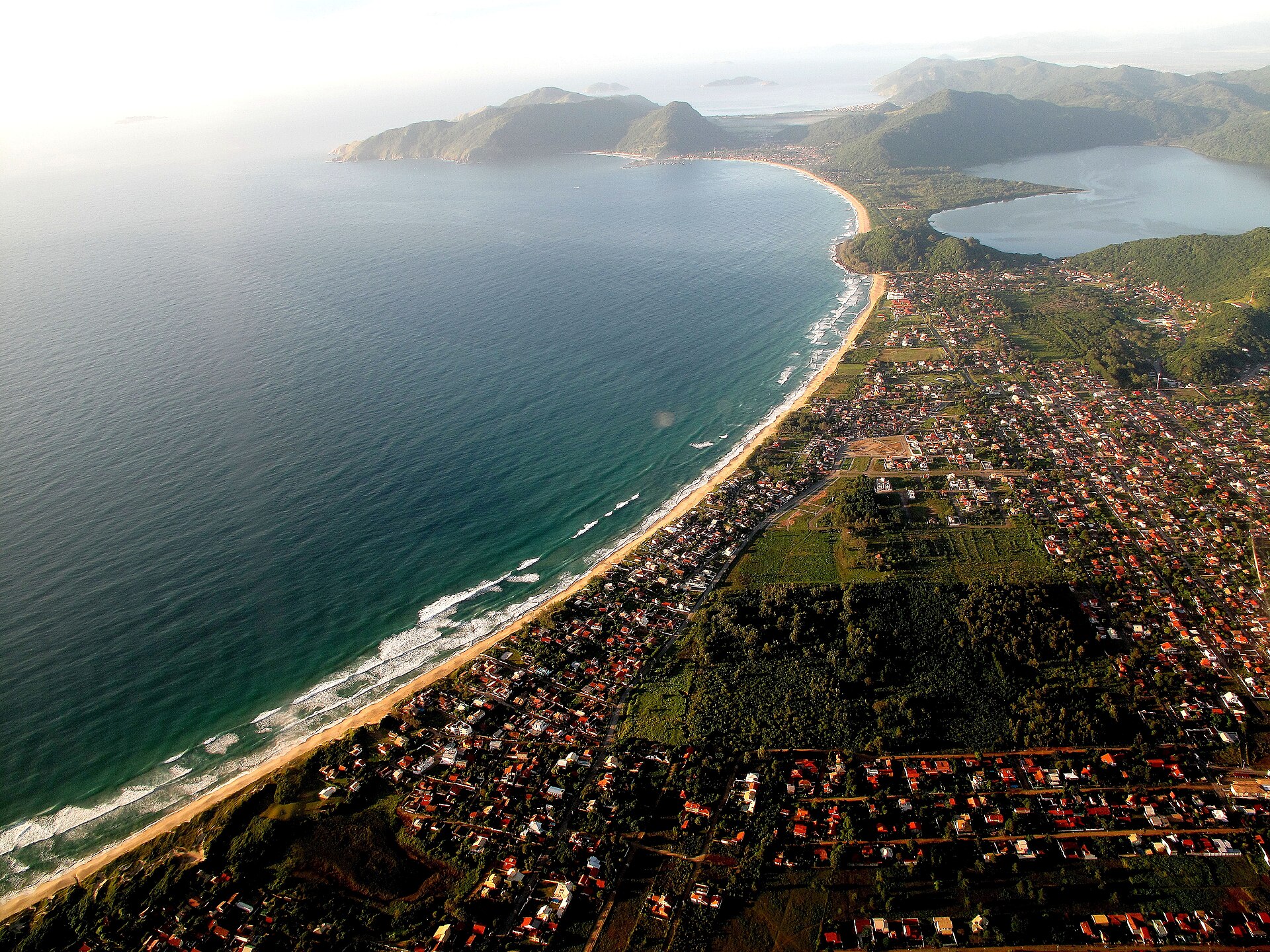
What Brazil offers that the others cannot match is scale and variety. You can choose the beach-and-startup vibe of Florianópolis, the cosmopolitan grind of São Paulo, the postcard intensity of Rio, the orderly affluence of Curitiba, or the warmth and culture of Salvador and the Northeast — all under one visa and one citizenship clock. For a detailed breakdown, see our cost of living guide and digital nomad cities guide.
We will not pretend Brazil is risk-free. Personal safety requires the same street sense any large, unequal country demands, and we cover it candidly in our honest safety guide rather than glossing over it. Argentina and Mexico carry their own well-known risks; Colombia has improved dramatically but is uneven by region. None of these countries is dangerous everywhere or safe everywhere — the honest answer is always neighborhood-by-neighborhood.
Picking your region in Brazil
Because Brazil is the size of a continent, "living in Brazil" means very different things depending on where you land. This breadth is the country's quiet superpower over the others — you are not choosing one city, you are choosing among genuinely distinct lives under a single legal framework.
- Rio de Janeiro — beaches, mountains and culture in one city, with the trade-off of higher prices in the prime southern zone and a need for street awareness. Best for people who want the postcard and the energy.
- São Paulo — the economic engine: jobs, restaurants, hospitals, international schools and a serious arts scene. Less scenic, more grind, but unmatched for professionals and families.
- The South (Florianópolis, Curitiba, Porto Alegre) — cooler climate, higher development indicators, strong infrastructure and a large established expat and remote-worker community. Often the easiest soft landing.
- The Northeast (Salvador, Recife, Fortaleza and beyond) — warmth year-round, lower cost of living, and the R$700,000 reduced property threshold for residency. Best value if you want sun and space.
You can change your mind without changing your visa or restarting your citizenship clock — something a multi-country LatAm shopper simply cannot do across Mexico, Colombia and Argentina. Our best cities guide goes deeper on each.
Money, banking and getting paid
Practical money mechanics decide how livable a country actually feels, and this is an underrated point in Brazil's favor. Brazil's domestic financial system is modern — instant payments via Pix are universal and free, and digital banks like Nubank, C6 and Inter are easy to use once you are resident. The friction for foreigners is front-loaded, not ongoing.
- You need a CPF to do almost anything financial — open an account, sign a lease, buy property, hold investments, even get a proper phone plan. Get it first; it is free and obtainable from abroad.
- Non-resident (CDE) accounts are possible with just a passport and CPF, which lets you move money in before you have a residence card.
- Resident accounts at most banks require your CRNM plus proof of address — another reason to register that card promptly.
- Getting paid from abroad works through standard international transfers; remember that non-withheld foreign income is prepaid monthly via Carnê-Leão, so keep records as you go.
By comparison, Argentina's banking is complicated by currency controls and parallel exchange rates that change the real value of your money week to week; Mexico and Colombia are more straightforward but neither matches Brazil's free instant-payment rail. See our bank account guide and banking service.
Moving as a family or couple
If you are relocating with a spouse, a partner or children, the comparison shifts again — and Brazil's family rules are notably generous. The family-reunion route covers spouses and partners, children, the parents of a Brazilian child, and ascendants and descendants to the second degree, with an initial visa up to one year, registration within 90 days, and full work rights (Migration Law Art. 37). That work-rights point matters: in several countries a trailing spouse cannot legally work, but in Brazil they can.
For binational couples, the advantages compound. Marriage or a stable union with a Brazilian shortens naturalization to one year and opens permanent residency by marriage. If you are planning to marry in Brazil or pursue citizenship by marriage, the legal path is well defined — and if a relationship ends, divorce for foreigners and inheritance for foreign heirs are areas we handle so you are not navigating Brazilian family and succession law alone. Families with school-age children should also read our international schools guide and start learning Portuguese early — it eases both daily life and the citizenship language requirement.
The bureaucracy reality — and how to beat it
Here is the part the listicles skip. Latin American bureaucracy is real, and Brazil's is famous for it. The difference between a smooth move and a miserable one is almost always preparation, not luck. A few documents unlock nearly everything in Brazil:
Get your CPF first
The CPF (taxpayer ID) is required for almost everything — bank, property, lease, SIM card, investments. It is free or near-free, obtainable at a Brazilian consulate abroad or online even before you move, and only needs your passport. A CPF is not tax residency. Start here. See our CPF guide.
Secure the right visa
Match the route to your situation — nomad, retiree, investor, marriage, family. Getting this wrong is the most expensive mistake we see. Browse our immigration service.
Register your CRNM within 90 days
After approval or entry, register with the Federal Police for your CRNM residence card — about R$372.90 total in 2026 (it replaced the old RNE). Miss the 90-day window and you create avoidable problems. See getting your CRNM.
Open a bank account
With a CPF you can open a non-resident (CDE) account; resident accounts usually need the CRNM and proof of address. Digital banks like Nubank, C6 and Inter are common once you are resident. See opening a bank account.
Sort driving and daily life
Your foreign licence is valid up to 180 days after you establish residence; then exchange it for a Brazilian CNH. Many countries (US, Portugal, France, Germany, Spain) are exempt from the driving test, though a medical/psych exam is required. See driving in Brazil.
Every country here has a version of this checklist. Brazil's is well-trodden and predictable once you know the order — which is exactly the value a local firm adds. We turn a months-long fog into a sequence.
So, which is the best country in Latin America for expats?
Honest answer: it depends on three things, and you can decide quickly once you name them.
- If you want a real second passport, free healthcare from day one, and to own a home outright — Brazil is the strongest all-round choice, especially with a Brazilian spouse or child shortening citizenship to one year.
- If proximity to the US and the deepest expat infrastructure matter most — Mexico leads, provided you clear the higher 2026 income bars.
- If you want the lowest income threshold and cheapest cost — Colombia is compelling, if you can live with a stricter tax regime and a moving rulebook.
- If you want European-flavored city life on a budget and can tolerate volatility — Argentina, eyes open.
For Americans, weigh the missing US–Brazil tax treaty seriously, but do not let it be the whole decision — it is a planning problem, not a wall. For Europeans, Brazil's existing treaties make the tax side cleaner, and you may also want to read our Brazil vs Portugal comparison if a Portuguese-speaking move is on the table.
Whichever country you choose, the principle is the same: decide on facts, not brochures. Count your days for tax, confirm the live visa thresholds with the relevant authority, and get your paperwork in the right order. Do that, and a Latin American move goes from daunting to genuinely doable. If that country turns out to be Brazil, get in touch — we will take it from there.
Frequently asked questions
Which Latin American country is easiest for an American to get residency in?
On income thresholds, Brazil and Colombia are the most accessible — Brazil's digital nomad visa asks just US$1,500/month or US$18,000 savings, and Colombia's nomad visa about US$1,400/month. Mexico's 2026 thresholds rose sharply (around US$4,300/month for temporary residency), making it harder than its reputation suggests. See our digital nomad visa guide for Brazil's exact rules.
Does Brazil tax my worldwide income like the other countries?
Yes. Once you become a Brazilian tax resident — generally after more than 183 days of presence in any rolling 12 months — you are taxed on worldwide income at progressive rates up to 27.5%, with the first R$5,000/month exempt under the 2026 reform. Mexico, Colombia and Argentina all tax residents on worldwide income too. Read our expat taxes guide.
Is it true there's no tax treaty between the US and Brazil?
Correct — there is no income tax treaty between the United States and Brazil, unlike the US treaties with Mexico, Colombia and Argentina. Americans rely on the Foreign Tax Credit and Foreign Earned Income Exclusion to avoid double taxation, and still file US returns plus FBAR/FATCA. Our US–Brazil tax guide explains how to handle it.
Can foreigners own property in Brazil more easily than in Mexico?
For city property, yes. Foreigners take direct title to urban residential property in Brazil with no nationality restriction and no bank trust — unlike Mexico, where coastal and border purchases run through a fideicomiso trust. Brazil restricts rural land and a 150 km border strip, but those rarely affect typical buyers. See our property guide for foreigners.
How long until I can become a citizen in Brazil versus the others?
Brazil requires four years of lawful residence for ordinary naturalization — shorter than Mexico's or Colombia's five years — and just one year if you are married to a Brazilian, have a Brazilian child, or hold a Portuguese-language country's nationality. Argentina is faster at two years but runs through the courts. See our naturalization guide.
Does Brazil really offer free healthcare to foreigners?
Yes — the public SUS system is free and universal to everyone on Brazilian soil, including foreign residents and visa-holders, with no waiting period and no income test. You register with a CPF and usually a CRNM. Most expats still add a private plan for speed; our healthcare guide covers both.