Portugal has spent a decade as the default answer for anyone Googling “where should I move abroad.” It earned that reputation. But the picture changed in 2024–2025 — the tax breaks that made Portugal famous are gone, the golden visa no longer buys property residency, and costs in Lisbon and the Algarve now rival mid-tier US cities. Brazil rarely makes the same lists, and that is exactly why it is worth a serious look. This is an honest, number-by-number comparison from a Brazilian law firm that works with foreigners every week — including the parts of Brazil we would not gloss over.
We are not here to talk you out of Portugal. For a lot of people it is still the right call, and we will say so plainly. What we want is for you to make the decision with real figures instead of a five-year-old blog post. Both countries speak Portuguese, both offer a path to an EU- or BRICS-anchored second passport, and both are far easier to enter than the United States, the UK, or Canada. After that, they diverge sharply — on cost, on taxes, on bureaucracy, and on the texture of daily life.
The short version: who each country is for
Before we get into the weeds, here is the honest summary we give clients on a first call.
Portugal is the better fit if you want to be inside the European Union, value Schengen free movement, are nervous about personal safety and want one of the safest countries in the world, or you specifically need the legal and institutional predictability of an EU member state. Portugal is small, calm, walkable, and close to everywhere in Europe.
Brazil is the better fit if you want a dramatically lower cost of living for the same lifestyle, a genuinely free universal healthcare system with no residency waiting period, a lower top tax rate, a faster route to citizenship (especially if you marry a Brazilian or have a Brazilian child), warmth and scale and energy that a country of 215 million brings — and you are willing to trade some safety and a lot more bureaucracy to get it.
Portugal sells stability. Brazil sells value and a faster passport. The right answer depends entirely on which of those you are actually buying.
Cost of living: this is where Brazil pulls ahead
For years Portugal was the cheap option in Western Europe. It still is — relative to Western Europe. But relative to Brazil it is now expensive, and the gap has widened because Lisbon and Porto rents climbed sharply through the early 2020s while the real stayed weak against the dollar and the euro.
At today's approximate rates (around R$5.2 per US$1 and R$5.9 per €1), the same monthly budget stretches much further in Brazil. A comfortable single-person lifestyle — a decent one-bedroom in a good neighborhood, eating out regularly, private health cover, transport — lands roughly in the R$6,000–12,000 (about US$1,150–2,300) range in most Brazilian cities, and at the lower end outside the Rio–São Paulo core. The equivalent in Lisbon or the Algarve now routinely runs €1,800–3,000+ once you factor in the rent reality on the ground.
Where Brazil wins hardest: rent, restaurants, domestic help, fresh food, fitness, and services of every kind. Where Portugal can be comparable or cheaper: imported goods, cars and fuel, electronics (Brazil's import taxes are brutal), and — importantly — the absence of the security premium some expats pay in Brazil for a building with a doorman or a gated condoínio.
A like-for-like snapshot
| Item (per month, approx.) | Brazil | Portugal |
|---|---|---|
| 1-bed apartment, good central area | R$2,500–5,000 (US$480–960) | €900–1,500 (US$970–1,620) |
| Mid-range dinner for two | R$120–200 (US$23–38) | €40–70 (US$43–75) |
| Private health plan, healthy 40-yr-old | R$400–900 (US$77–173) | €40–100 (US$43–108) |
| Domestic cleaner, per visit | R$120–180 (US$23–35) | €50–80 (US$54–86) |
| Public transit pass | R$200–300 (US$38–58) | €30–40 (US$32–43) |
Figures are illustrative ranges that vary by city and date — verify against a live source like Numbeo before you budget. Note one real twist: private health insurance is cheaper in Portugal, partly because Portugal's public system carries more of the load and partly because Brazilian private plans price in heavy private-hospital use. We come back to healthcare below, because the comparison is more interesting than the price tag.
Healthcare: free and universal in both — with a real difference
This is the category where Brazil surprises people. Brazil's SUS (Sistema Único de Saúde) is genuinely universal: it is free at the point of care to everyone physically on Brazilian soil — citizens, residents, visa-holders, even tourists in an emergency — with no waiting period and no residency clock to satisfy. The day you land, you are covered. To register you generally need a CPF and usually a CRNM.
Portugal's SNS is also strong and largely free, but access for a newly arrived foreigner is tied to legal residence and registration with your local health center, and the system has well-documented wait times for non-urgent specialist care. Both countries see most expats carry a private plan on top of the public system — for speed, English-speaking doctors, and choice of hospital.
The honest read: Brazil's public system is more immediately accessible to a new arrival; Portugal's is more consistent in quality across regions. Brazil's best private hospitals (Albert Einstein and Sírio-Libanês in São Paulo, for instance) are world-class. Brazil's public hospitals are stretched and uneven — excellent for emergencies and vaccination, frustrating for elective specialist queues, which is precisely why a private plano de saúde is standard for expats.
The cost math is the part newcomers underestimate. A mid-tier private plan in Brazil for a healthy adult often runs less than US$150 a month, and it buys fast access to those top private hospitals, English-speaking specialists, and short waits for scans and procedures. Stack that on top of free SUS and you have, for most people, more comprehensive coverage than they had at home — at a fraction of US prices and without the deductibles. The catch is that Brazilian private premiums rise sharply with age, so a couple in their sixties should price plans carefully before assuming the budget holds. Portugal's private plans are cheaper at the headline level but lean more heavily on the public SNS as the backbone, so the two systems are not quite comparing the same product.

Visa ease: two different doors, both more open than the US or UK
Here the two countries are closer than the cost comparison, but they reward different profiles. Portugal's headline routes are the D7 (passive income / retirement) and D8 (digital nomad). The D7 has a famously low bar — you need to show roughly €920/month of stable passive income (tied to Portugal's minimum wage) plus around €11,040 in savings for a single applicant. The D8 nomad visa is much steeper, requiring about €3,680/month (four times minimum wage) for remote workers.
Brazil's equivalents:
- Digital nomad visa (VITEM XIV): show US$1,500/month of foreign income or US$18,000 in savings. One-year residence, renewable once. Much lower income bar than Portugal's D8. See our digital nomad visa guide.
- Retiree / rentista residence: around US$2,000/month of passive income — this is the least firmly pinned figure, so confirm the current threshold with a consulate or the Polícia Federal. Comparable to Portugal's D7 in spirit. See retirement visa.
- Investor residence by real estate: R$1,000,000 in urban property, reduced to R$700,000 in the North/Northeast. Initial four-year term, renewable. Detail in our Brazil golden visa guide.
- Investor residence by company: R$500,000 standard, dropping to R$150,000 for an innovation / startup / R&D venture. See investment visa.
- Family reunion: spouse, partner, children, and parents of a Brazilian child all qualify, with full work rights, under Brazil's 2017 Migration Law. This is one of Brazil's strongest cards — more on it below.
One difference matters for Americans specifically: as of April 2025, Brazil reintroduced an e-visa for US, Canadian, and Australian tourists — about US$80–81, 10-year validity, 90 days per entry (max 180 per 12 months). It is an online form, not an interview. Confirm the current rule and fee in our 2026 e-visa guide.
Taxes: the category where the ground shifted under Portugal
For a decade, Portugal's trump card was its Non-Habitual Resident (NHR) regime — a flat 20% on certain Portuguese income and, crucially, near-zero tax on much foreign pension and passive income for ten years. It is the single biggest reason high earners and retirees chose Portugal.
That regime is closed. NHR ended for new arrivals (with applications shutting through 2024 and a transitional window into March 2025). Its replacement, IFICI (informally “NHR 2.0”), offers a 20% rate — but only on qualified employment and self-employment income for people in scientific, research, and high-value innovation roles, and it no longer shelters pensions, dividends, or rental income. Those now fall under Portugal's standard progressive rates, which top out around 53%. For a retiree living on a US or UK pension, the Portugal of 2026 is a very different tax proposition than the Portugal of 2020.
Brazil's tax system is not simple either, but the headline numbers compare favorably:
- Top marginal IRPF rate of 27.5% — roughly half Portugal's ceiling.
- 2026 reform (Lei 15.270/2025): monthly income up to R$5,000 is fully exempt, with partial relief to R$7,350/month and an annual full exemption up to R$60,000. A new minimum tax targets very high earners, and a 10% withholding applies to monthly dividends over R$50,000 from a single entity.
- Residents are taxed on worldwide income once they cross the 183-day threshold (or from entry on a permanent visa). This is the catch — Brazil, like Portugal, will tax your global income once you are resident.
The American footnote that changes everything
If you hold a US passport, read this twice. There is no income tax treaty between the United States and Brazil. Portugal, the UK, Spain, and most of Europe do have treaties with Brazil. For US citizens, the absence means you cannot lean on a treaty to allocate taxing rights — you rely instead on the Foreign Tax Credit (FTC) and/or the Foreign Earned Income Exclusion (FEIE) to avoid double taxation, and you still file US returns plus FBAR/FATCA disclosures every year regardless of where you live.
In practice this is manageable — thousands of Americans live in Brazil and stay compliant — but it is more delicate than the treaty-backed Portugal route, and getting it wrong is expensive. This is exactly the kind of cross-border planning we tell people to set up before they move, not after. Read our US–Brazil double taxation guide and our broader expat taxes in Brazil overview.
Buying property: open in Brazil, but watch the special cases
Both countries let foreigners buy real estate freely, with no need for residency to own. In Brazil specifically:
- Urban residential property: foreigners buy with no nationality or geographic restriction. An apartment in Rio or São Paulo is as open to you as to a Brazilian.
- Rural land is restricted — INCRA authorization, caps on how much of a municipality foreigners can hold, and per-nationality limits (Law 5.709/1971).
- Border strip (150 km along international borders) needs National Defense Council approval.
- Terreno de marinha (coastal “marine land”): you own the building, but the land underneath is federal, carrying an annual foro fee and a laudemio on transfer. Reform proposals are pending, so treat this as the current rule and check before you buy beachfront.
Closing costs run roughly 5–7% of price: ITBI transfer tax around 2–4% (typically ~3% in São Paulo and Rio) plus notary and registry fees of about 1–1.5%. Because Brazil's property registration is notary-and-registry based, due diligence on the chain of title matters enormously — it is the step where foreign buyers most often get burned. Start with our buying property in Rio guide and the general buying property as a foreigner overview.
Citizenship: Brazil's fast lane is genuinely fast
This is one of Brazil's strongest and least-advertised advantages. Both countries permit dual citizenship and neither requires you to renounce your original nationality.
Portugal: ordinary naturalization after five years of legal residence, with a language requirement (A2 Portuguese) and a clean record. Portuguese citizenship is, of course, EU citizenship — a passport that unlocks the right to live and work across 27 countries. That is a powerful prize and the main reason many choose Portugal despite the tax changes.
Brazil: ordinary naturalization after four years of lawful residence with Portuguese ability and a clean record — and the timeline drops to just one year if you are the spouse or stable partner of a Brazilian, the parent of a Brazilian child, or a national of a Portuguese-language (CPLP) country. There is also citizenship by descent for a child born abroad to a Brazilian parent.
So the comparison is profile-dependent: if you have no family tie, Brazil is one year faster (four vs five). If you marry a Brazilian or have a child in Brazil, you can naturalize after a single year — dramatically faster than any standard EU route. Read our naturalization guide and, for couples, citizenship by marriage and permanent residency by marriage.
Enter and register
Arrive on the right visa, then register with the Federal Police and collect your CRNM within 90 days.
Build lawful residence
Maintain legal residence — one year (family/CPLP route) or four years (ordinary). Keep clean records and tax filings throughout.
Meet the language bar
Show ability to communicate in Portuguese (e.g. CELPE-Bras). CPLP nationals and 15+-year residents are exempt.
Apply for naturalization
File with the Ministry of Justice; processing times vary, so build in patience.
Receive Brazilian citizenship
Keep your original nationality — Brazil permits dual citizenship with no renunciation.
Lifestyle: small and calm vs vast and vivid
Numbers only take you so far; the deciding factor is often how the place feels. Portugal is compact, orderly, and reassuring. You can drive its length in a day, the streets are quiet, the bureaucracy — while slow — is broadly predictable, and you are a short flight from Paris, Madrid, or London. Its expat communities are dense and easy to plug into. For many people, especially retirees, that calm is the entire point.
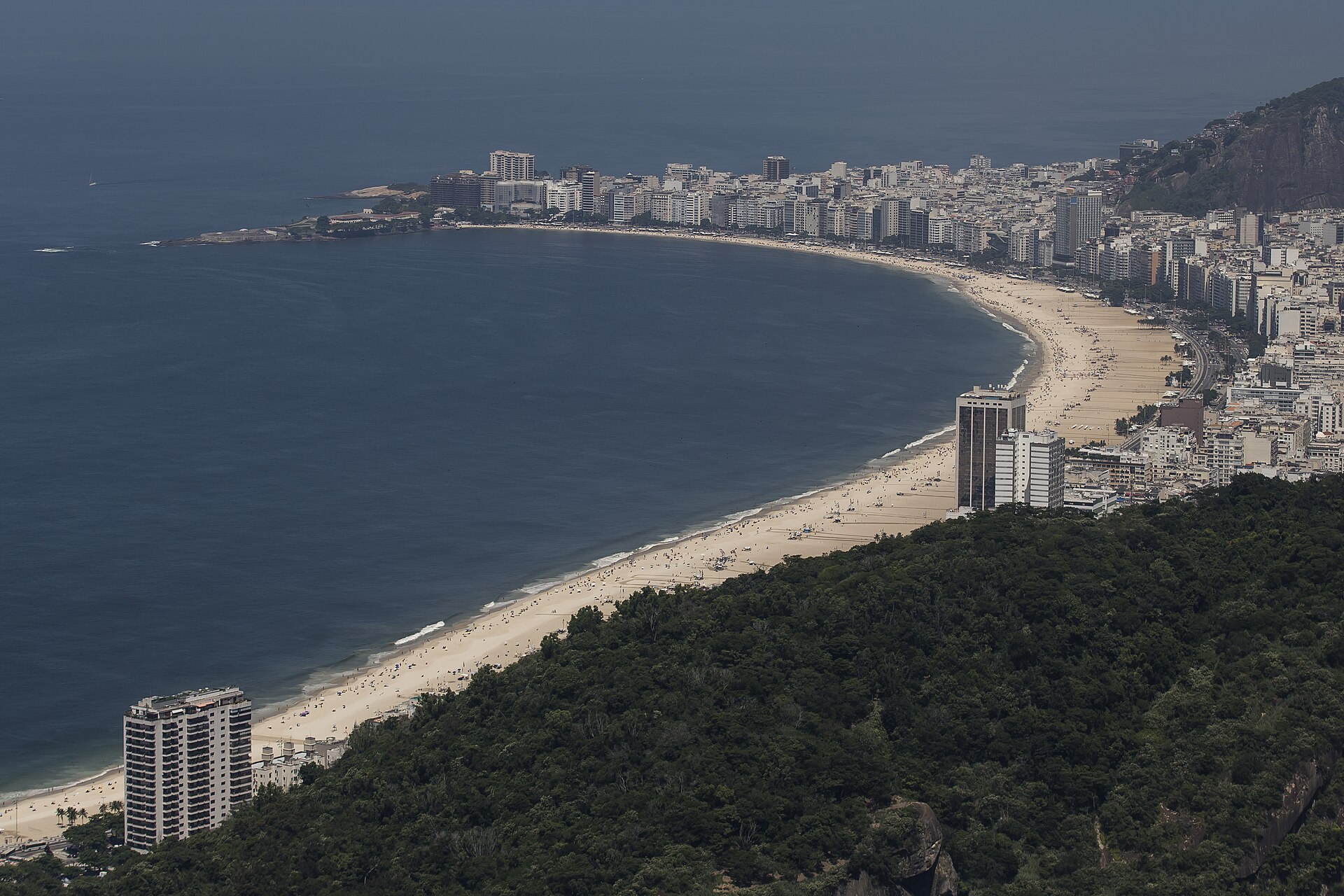
Brazil is the opposite kind of experience: enormous, loud, warm, and endlessly varied. The same country gives you Rio's beaches and mountains, São Paulo's restaurant-and-culture density, the colonial calm of Paraty and Ouro Preto, the island living of Florianópolis, the Northeast's coastline, and the Amazon. Brazilians are famously welcoming, and a foreigner who makes any effort with Portuguese is met with real generosity. The trade-offs are equally real: more bureaucracy, more friction in everyday systems, and a safety picture that demands attention.
Language is a quiet point in Brazil's favor. Both countries speak Portuguese, but Brazilian Portuguese is the variety most learning apps, tutors, and media teach, and Brazilians are more forgiving of a beginner's accent than many European Portuguese speakers. If you are going to invest the effort to learn the language anyway, Brazil gives you 215 million people to practice with and a culture that rewards the attempt warmly. Our learning Portuguese guide covers how to get to a functional level fast. For families, the spread of international schools in the major cities means children can transition on an English or bilingual curriculum while picking up Portuguese naturally.

The safety conversation, handled honestly
We will not pretend this is even. Portugal consistently ranks among the safest countries in the world; Brazil does not. Brazil's crime is also highly uneven — concentrated in specific areas and cities, while plenty of neighborhoods, smaller cities, and the safer hubs like Florianópolis, Curitiba, and parts of the South feel calm day to day. Expats adapt with the same habits locals use: choosing the right neighborhood, a building with security, situational awareness, and not flashing valuables. If personal safety is your single biggest concern, Portugal wins that line item clearly. If you are comfortable making the adjustments most Brazilians make automatically, it becomes one factor among many. Read our straight-talking is Brazil safe for expats guide and our roundup of the best cities in Brazil for expats.
Banking, ID, and the daily admin
Both countries make you do paperwork; Brazil makes you do more of it, but the core sequence is learnable. The single most important document is the CPF (taxpayer ID) — you need it for a bank account, a lease, a SIM card, investments, and a property purchase. It is free or near-free, available at a Brazilian consulate abroad or online (even for non-residents), and a CPF does not make you a tax resident. Get it first; everything else depends on it.
Bank accounts follow: a CPF is mandatory, a non-resident (CDE) account is possible with passport plus CPF, and a full resident account usually needs your CRNM and proof of address. Once you are set up, Brazil's digital banks — Nubank, C6, Inter — are excellent and widely used. Our opening a bank account and CPF for foreigners guides walk through both.
Driving transfers cleanly too: your foreign license is valid for up to 180 days after you establish residence (carry your passport and an International Driving Permit), after which you exchange it for a Brazilian CNH. Drivers from the US, Portugal, France, Germany, and Spain are typically exempt from the road test, though a medical and psychological exam is required. See driving in Brazil.
Your move-to-Brazil checklist
- Get your CPF — at a consulate before you fly, or online. Nothing else works without it.
- Choose the right visa route for your profile (nomad, retiree, investor, or family).
- Enter, then register with the Federal Police within 90 days and collect your CRNM.
- Register for SUS and choose a private plano de saúde for everyday care.
- Open a bank account (digital banks once you have CRNM and proof of address).
- Set up tax compliance — including monthly carnê-leão if you draw foreign income, and US FBAR/FATCA if American.
- Sort housing: understand condomínio fees and the fiador/guarantor system for leases.
- Plan your citizenship timeline early if a passport is the goal — family ties can cut it to one year.
Head-to-head scorecard
| Factor | Brazil | Portugal |
|---|---|---|
| Cost of living | Lower — clear winner for the same lifestyle | Higher, especially Lisbon/Algarve rents |
| Public healthcare | SUS — free, no waiting period for residents | SNS — good, tied to residence registration |
| Easiest income-based visa | Nomad US$1,500/mo; retiree ~US$2,000/mo | D7 ~€920/mo (low); D8 ~€3,680/mo (high) |
| Top income tax rate | 27.5% | Up to ~53% (NHR breaks now gone) |
| Tax treaty with the US | None — rely on FTC/FEIE | Yes |
| Citizenship timeline | 4 yrs; 1 yr via marriage/Brazilian child/CPLP | 5 yrs |
| Passport value | Strong regional + BRICS reach | EU citizenship — 27-country free movement |
| Personal safety | Uneven; manageable with the right habits | Among the safest countries globally |
| Bureaucracy | Heavier; CPF/CRNM/Federal Police steps | Slow but more predictable |
| Climate & scale | Vast, varied, warm | Compact, mild, close to Europe |
So which should you choose?
If the deciding factor is an EU passport and maximum safety, choose Portugal and go in with eyes open about the post-NHR tax reality — the country is more expensive and less tax-friendly for retirees than its reputation suggests. If the deciding factors are cost, a lower tax ceiling, immediate free healthcare, and a faster route to citizenship — especially with a Brazilian spouse or child — Brazil is the stronger value and deserves to be on your shortlist instead of dismissed.
For a lot of people the honest answer is “it depends on your family situation, your income source, and your appetite for adventure versus calm.” That is not a cop-out; it is the truth, and it is why a 30-minute conversation about your numbers beats any generic ranking. If you want help comparing the two against your specific profile — visa eligibility, tax exposure, the citizenship clock — that is exactly what we do.
Read next: moving to Brazil from Europe, moving to Brazil from the USA, retire in Brazil, or our companion piece Brazil vs Argentina, Colombia & Mexico. When you are ready, see our immigration and visa services or just get in touch — we are an English-speaking, OAB-licensed Brazilian firm built for exactly this decision.
Frequently asked questions
Is Brazil cheaper than Portugal for expats?
For the same lifestyle, yes — noticeably so on rent, dining, services, and domestic help, especially outside the Rio–São Paulo core. Portugal can be comparable or cheaper on imported goods, cars, and electronics, and Brazilian private health insurance and any security premium can narrow the gap. See our cost of living in Brazil guide for real numbers.
Did Portugal's tax advantage for expats really end?
Largely, yes. The old NHR regime that gave near-zero tax on foreign pensions and passive income closed to new arrivals through 2024–2025. Its replacement, IFICI, only benefits qualified high-value workers and no longer shelters pensions, dividends, or rent — which now face standard rates up to around 53%.
Is it easier to get a visa for Brazil or Portugal?
Both are far easier than the US or UK. Brazil's digital nomad visa needs only US$1,500/month of income (vs Portugal's D8 at ~€3,680/month), while Portugal's D7 retiree visa has a lower income bar than Brazil's ~US$2,000/month retiree route. The best fit depends on whether you are a remote worker, retiree, investor, or have family ties. Compare our digital nomad and retirement visa guides.
How fast can I get citizenship in Brazil versus Portugal?
Portugal takes five years of residence; Brazil takes four — and just one year if you are married to a Brazilian, have a Brazilian child, or are a citizen of a Portuguese-language (CPLP) country. Both allow dual citizenship with no renunciation. Details in our naturalization guide.
Do Americans face double taxation in Brazil?
There is no US–Brazil tax treaty, unlike Portugal which has one. Americans avoid double taxation using the Foreign Tax Credit and/or Foreign Earned Income Exclusion, but must still file US returns plus FBAR/FATCA. It is manageable with planning — see our US–Brazil double taxation guide — but worth setting up before you move.
Can foreigners buy property in Brazil?
Yes — urban residential property is fully open to foreigners with no residency requirement. Rural land, border zones, and coastal “marine land” (terreno de marinha) carry special rules and fees. Closing costs run about 5–7%. Start with our buying property in Rio guide.
Sources & further reading
- gov.br — Migration & visas (Ministério das Relações Exteriores)
- Polícia Federal — Migration (CRNM / residence registration)
- Receita Federal — Income tax for individuals (IRPF / carnê-leão)
- PwC — Worldwide Tax Summaries: Brazil (individuals)
- KPMG — Portugal: Expatriate (NHR) regime ended; new IFICI incentive
- SUS — Sistema Único de Saúde (Ministério da Saúde)