Foreigners can buy an apartment in Rio de Janeiro as freely as a Brazilian can — full freehold title, no residency requirement, no local partner, no special permit. A passport and a CPF number are legally enough. The risk in Rio is never whether you're allowed to own; it's the process, the coastal-land quirks, and the taxes nobody mentions until closing.
We are an English-speaking, OAB-licensed Brazilian law firm that handles property purchases for Americans and Europeans. This is the honest, Rio-specific companion to our national guide to buying property in Brazil as a foreigner: what neighborhoods actually cost, how the conveyancing really works in the cidade maravilhosa, where the city's beachfront hides a federal-land trap, and what you'll pay in tax both as a buyer and when you eventually sell.

Can foreigners buy property in Rio de Janeiro?
Yes, and the rule is genuinely simple. For urban residential property — apartments, houses, commercial units, urban land lots — there is no nationality restriction and no residency requirement. You do not need a visa, a green card, a Brazilian spouse, or even to set foot in the country (you can buy through a power of attorney). On paper Brazil is one of the most open major property markets in the world, and almost all of Rio's housing stock is ordinary urban real estate that a foreigner can own outright.
The restrictions that exist are about type and location, not about who you are:
- Rural land is restricted — foreign ownership requires INCRA authorization, with a ceiling of 25% of any municipality's area under foreign ownership and 10% to a single nationality (Law 5.709/1971). This rarely touches a city apartment, but matters if you eyed a sítio in the hills behind Rio.
- The border strip (faixa de fronteira) — 150 km along international borders — needs National Defense Council approval (Law 6.634/1979). The city of Rio is nowhere near a border, so this won't affect a Zona Sul flat.
- Terreno de marinha — federal "marine land" along the coast — is the one that genuinely affects Rio buyers. More on this below, because Copacabana, Ipanema, Leblon and Flamengo are full of it.
Rio neighborhood prices: what your money actually buys
Rio is not one market. Prices swing enormously between the beachfront Zona Sul, the family-oriented Barra da Tijuca, and the cheaper, less touristy Zona Norte. The figures below are broad per-square-meter ranges for asking prices on finished apartments in good condition, in R$ with rough US$/€ equivalents at ~R$5.2/US$ and ~R$5.9/€ (approx). Rio prices move and vary block by block, so treat these as orientation and verify the current figure for any specific building with a local agent before you budget.
| Neighborhood | Character | Typical price / m² (approx, verify) | Per m² in US$ / € |
|---|---|---|---|
| Leblon | Rio's most expensive; leafy, upscale, beachfront | R$30,000–40,000+ | ~US$5,800–7,700 / €5,100–6,800 |
| Ipanema | Iconic beach, dining, walkable | R$25,000–35,000+ | ~US$4,800–6,700 / €4,200–5,900 |
| Copacabana / Leme | Dense, famous, huge range by block and view | R$12,000–22,000 | ~US$2,300–4,200 / €2,000–3,700 |
| Botafogo / Flamengo | Bay views, transit, gentrifying, good value | R$11,000–18,000 | ~US$2,100–3,500 / €1,900–3,100 |
| Barra da Tijuca | Modern, gated, car-dependent, family-friendly | R$10,000–16,000 | ~US$1,900–3,100 / €1,700–2,700 |
| Recreio / Jacarepaguá | Newer, quieter, lower cost, further out | R$8,000–12,000 | ~US$1,500–2,300 / €1,400–2,000 |
| Tijuca / Zona Norte | Traditional, residential, most affordable | R$6,000–10,000 | ~US$1,200–1,900 / €1,000–1,700 |
What this means in practice: a small, well-located one-bedroom (say 50–60 m²) in Copacabana often lands somewhere around R$700,000–1,200,000, while the equivalent in Leblon can easily double that. Move to Botafogo or Barra and your money buys noticeably more floor space. The Zona Norte (Tijuca, Vila Isabel, Méier) is where locals priced out of the beach neighborhoods buy, and where a foreigner chasing yield rather than a sea view will find the best price per square meter.
Which neighborhood suits which buyer
A quick orientation, because the "best" area depends entirely on what you want from Rio:
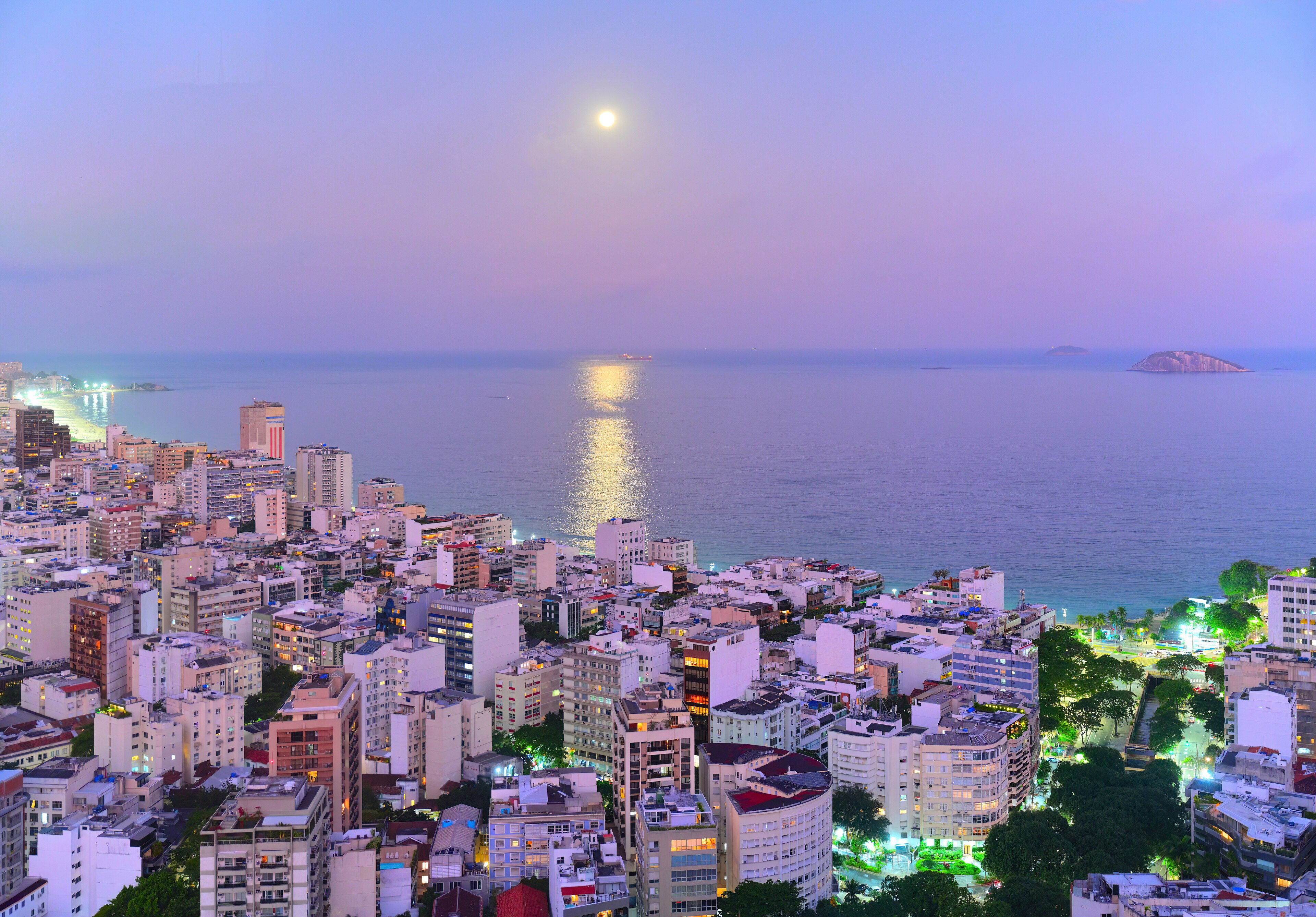
- Ipanema and Leblon suit buyers who want the postcard — walkable beach life, the best restaurants, the most liquid resale market, and the lowest perceived crime in the Zona Sul. You pay the most per square meter in Brazil for it, and most of it is terreno de marinha.
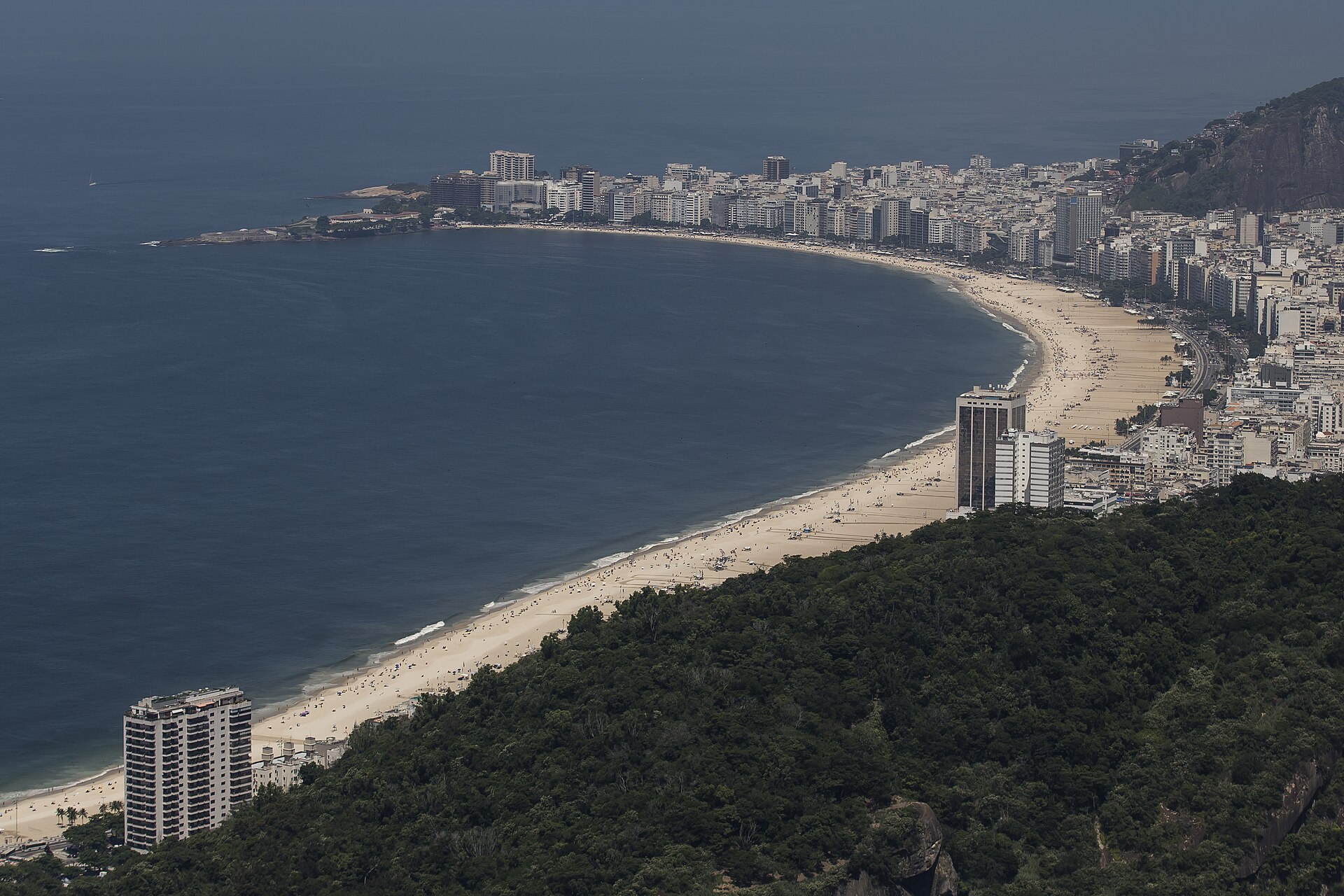
- Copacabana and Leme suit buyers who want the beach and the buzz at a more accessible price, and who don't mind density, tourism and noise. The range within these neighborhoods is enormous — a frente-mar penthouse and a back-street studio are different worlds.
- Botafogo and Flamengo are where a lot of younger Brazilians and savvy foreigners are buying now: Guanabara Bay views, excellent metro access, a fast-improving food and bar scene, and prices well below Ipanema. Good value, genuine upside.
- Barra da Tijuca and Recreio suit families who want space, modern construction, gated security and parking, and don't mind being car-dependent and 40 minutes from the historic center. Think suburban, not bohemian.
- Santa Teresa — the hilltop artists' quarter — suits buyers who want charm, character houses and views over money or convenience; access is steep and parking is hard, but nothing else in Rio feels like it.
Condominium fees: the cost everyone forgets
Brazilian apartments carry a monthly condomínio fee covering staff, security, lifts, and common areas — and in Rio's older beachfront buildings, with 24-hour porters and pools, it can be substantial: often R$1,000–3,000+/month for a mid-size unit in a Zona Sul building, sometimes more. Add monthly IPTU (the municipal property tax). Before you fall for a price, ask for the building's condomínio figure and a recent IPTU bill, and check whether any major works (a roof, a façade, an elevator overhaul) are coming — those trigger one-off levies (rateios) that land on whoever owns the unit when the bill comes due.
In Rio, the apartment you can afford to buy and the apartment you can afford to keep are two different questions — the condomínio answers the second.
The one thing that makes Rio different: terreno de marinha
This is the section to read twice. A large share of Rio's most desirable property — including stretches of Copacabana, Ipanema, Leblon, Flamengo, Botafogo and Urca — sits on terreno de marinha, "marine land." These are coastal areas within 33 meters of the historical mean high-tide line, where the federal government owns the soil and you own only the building on top of it.
It is not a reason to walk away — much of Rio's beachfront works this way, and people buy, sell and live in these apartments perfectly happily. But you must understand the structure before you sign, because it changes what you own and what you pay:
- You hold the property through an occupancy right (ocupação) or a leasehold (aforamento), not pure freehold of the land.
- You pay an annual ground rent to the federal government — the foro — typically a small percentage of the land value.
- Every time the property changes hands you pay a federal transfer fee — the laudêmio — historically around 5% of the transfer value of the land portion (currently; confirm the rate applied to your specific property). This is on top of the municipal ITBI.
- To transfer cleanly you usually need a certidão da SPU (from the Secretaria do Patrimônio da União, the federal land authority) confirming the foro is paid and the laudêmio is settled.
There are reform proposals currently pending in Congress that could change or even phase out the terreno de marinha regime over time. Nothing has changed the basic rules as we write, so plan for the system as it stands and have a specialist review any beachfront purchase before you commit. If a building straddles the marine-land line, the registry and SPU records — not the agent's reassurance — are what settle it.
The buying process, step by step
Buying in Rio follows the national Brazilian process, with the marine-land check bolted on. Here is the realistic sequence.
Get your CPF
Brazil's taxpayer ID is required for everything — the bank account, the deed, the utilities, the lease if you rent first. It's free or near-free and you can get it at a Brazilian consulate abroad or online before you arrive, with just your passport. See our CPF guide. A CPF does not make you a tax resident.
Sign nothing yet
The promessa de compra e venda that agents present as a "reservation" is a binding purchase contract, usually with a 10–20% penalty for walking away. Do not sign it, and do not pay a deposit, until due diligence is done.
Run full due diligence on the matrícula
Order the certidão de matrícula (the property's registry record at the local Cartório de Registro de Imóveis) plus the seller's personal certificates. This is where you confirm clean title, no liens, paid taxes, and — in Rio especially — the terreno de marinha status.
Move funds through the FX channel
Wire your purchase money into Brazil through a documented foreign-exchange contract tied to your CPF, so the central bank registers the incoming capital. This is what lets you legally send the proceeds back out when you sell. See opening a bank account in Brazil.
Sign the escritura and pay ITBI
The deed (escritura) is signed before a notary (tabelião). You pay the municipal transfer tax, ITBI (~3% in Rio), plus notary fees. For terreno de marinha, the laudêmio and an SPU clearance come in here too.
Register the deed — only now do you own it
The escritura is registered at the Cartório de Registro de Imóveis, which updates the matrícula to show your name. Until registration, you are not the owner, whatever you've signed and paid. This is the step that actually transfers ownership.
Due diligence: what a Rio title search must catch
This is the part that protects you, and the part DIY buyers skip to "save time." In Brazil, debts and disputes attach to the property and the seller in ways that can reach back and undo a sale years later. A proper search confirms, at minimum:
- The seller is the true registered owner on the matrícula, with no undisclosed co-owners or heirs
- No mortgages, liens, judicial blocks (penhora) or other encumbrances on the property
- No lawsuits against the seller that could claw back the sale under fraud-against-creditors rules — including labor claims, which are a frequent trap in Brazil
- IPTU (municipal property tax) and condomínio dues are fully paid — in Brazil these debts follow the property, not the person who ran them up
- The unit's built area matches the registry (no unregistered extensions — averbações)
- The terreno de marinha status is confirmed, with a current SPU certificate, foro paid and laudêmio settled where it applies
- For off-plan units: the developer's incorporation registration (memorial de incorporação) and delivery/penalty clauses
Taxes and closing costs in Rio
The threshold is the purchase price; the costs sit on top. Budget for these.
When you buy
- ITBI (Imposto de Transmissão de Bens Imóveis): a municipal transfer tax, around 3% in the city of Rio, charged on the higher of the price paid or the valor venal (assessed value). It's paid before the deed is registered.
- Notary and registry fees: together roughly 1–1.5% for the escritura and the matrícula registration.
- Laudêmio: if the property is terreno de marinha, add the federal transfer fee (historically ~5% of the land transfer value — confirm the figure for your property).
- Total: plan for 5–7% of the purchase price all-in on a standard freehold unit, and more on beachfront marine land once laudêmio is included, before legal fees.
When you own
Annual IPTU (municipal property tax) — modest by US or European standards — plus the monthly condomínio and, on terreno de marinha, the annual foro. If you rent the apartment out, Brazil taxes the rent (monthly, even for non-residents).
When you sell — the part Americans must read
This is where the FX channel from step 4 pays off, and where the rules are genuinely contested.
- Your taxable gain is measured against the documented purchase price — the value recorded through your foreign-exchange contract. Money that arrived informally becomes money you struggle to send out and a gain you can't properly offset. This alone is why you wire through the FX channel.
- Non-resident capital gains: historically a flat 15%. Current PwC guidance applies a progressive scale instead — 15% up to R$5M, then 17.5%, 20% and 22.5% above R$30M — and 25% if the seller sits in a tax-haven jurisdiction. This area is contested and shifts, so treat the progressive scale as current, note the historical flat 15%, and run any sale past a tax professional and any applicable treaty before you sign.
If you live here: tax residency
Owning an apartment and visiting occasionally does not make you a Brazilian tax resident. Living here does — you become resident once you spend more than 183 days (consecutive or not) in any rolling 12-month window, or immediately on entry with a permanent visa. Residents are taxed on worldwide income, top marginal rate 27.5%. The 2026 reform (Lei 15.270/2025) exempts monthly income up to R$5,000, with partial relief to R$7,350/month. Foreign-source income (a pension, overseas rent) is reported and pre-paid monthly via Carnê-Leão on Receita Federal's e-CAC. Our expat tax guide covers this in full.
Financing and paying: cash is king for foreigners
Be realistic about mortgages. Brazilian banks rarely lend to non-resident foreigners, and when they do, the terms are unattractive — high interest, large down payments, heavy documentation. In practice, almost every foreign buyer in Rio purchases with cash brought in from abroad, which is exactly why the FX channel matters so much.
Two common routes for foreign buyers:
- Wire the full price through a documented exchange contract tied to your CPF. Your câmbio bank or broker registers the incoming capital with the central bank. Clean, traceable, and what lets you repatriate proceeds later.
- Developer installment plans on off-plan (na planta) units. Brazilian developers often sell in installments during construction. Consumer law gives you real protection here — but only if you assert it, so have the contract and the developer's track record reviewed before committing.
Should you rent in Rio first?
For most foreigners, the smartest move is to rent in Rio for a few months before buying. Neighborhoods that look identical on a map feel completely different on the ground — noise, safety after dark, sun exposure, the walk to the beach, the reliability of the building. Renting lets you learn the city block by block, and it costs a fraction of a mistaken purchase.
Renting also surfaces the practical realities — how a Brazilian lease and its guarantor (fiador) system work, how condomínio fees feel month to month, which areas suit your life. Our guide to renting an apartment in Brazil as a foreigner walks through the lease mechanics, and if you're weighing whether Rio is even the right city, see our best cities for expats guide and our honest take on safety in Brazil.
Working with agents and reading Rio listings
A few things about the Rio market catch foreigners off guard, and knowing them saves time and money.
- The corretor must be CRECI-registered. A legitimate real estate agent in Brazil holds a CRECI license (the regional realtors' council number). Ask for it. An unlicensed "agent" has no professional accountability, and you have far less recourse if the deal goes wrong.
- Listings are not centralized. Brazil has no single MLS like the US. The same apartment may appear on several portals (ZAP, VivaReal, QuintoAndar and others) at different prices, listed by different agents. Cross-check, and don't assume the first price you see is the floor.
- "Quarto," "sala," and "vaga" matter. Listings count bedrooms (quartos), living rooms (salas) and parking spaces (vagas) separately. A "2 quartos" with no vaga in Copacabana means street parking only — a real cost and inconvenience in a dense neighborhood.
- Área útil vs área total. Listings quote both the usable internal area (área útil/privativa) and the total area including a share of common space (área total). The per-square-meter math changes depending on which you use — confirm which the price is based on.
- Negotiation is normal. Asking prices in Rio usually have room in them, especially for a cash buyer who can close cleanly. Don't be shy about a reasoned offer below asking.
Buying as a path to residency or citizenship
If you want your Rio purchase to do double duty as a route to living in Brazil, the bar is much higher than simply owning. The investor residence route requires roughly R$1,000,000 of urban property (reduced to R$700,000 in the North or Northeast — which does not include Rio, in the Southeast) registered in your own name. That earns an initial four-year residence, renewable and convertible to permanent if you keep the investment. Full details are in our golden visa guide and investment visa guide.
If you don't have R$1M to commit, there are usually better residency routes than property:
- Digital nomad visa — US$1,500/month foreign income or US$18,000 savings, for remote workers.
- Retirement / rentista — around US$2,000/month passive income (the least firmly pinned figure; confirm the current threshold with a consulate or the Polícia Federal).
- Marriage or family reunion — if you have a Brazilian spouse, partner or child, this is faster and cheaper than buying R$1M of property, and it cuts the naturalization wait to one year.
Whichever route you take, residence eventually opens a path to naturalization (four years' lawful residence, basic Portuguese, clean record — one year for spouses of Brazilians, parents of a Brazilian child, or CPLP nationals). Brazil permits dual citizenship, so Americans and Europeans generally keep their original passport.
Common mistakes foreigners make buying in Rio
- Signing the promessa de compra e venda before due diligence — the classic, and the most expensive
- Not checking terreno de marinha status, then getting hit with a laudêmio bill at closing
- Sending money outside the FX channel — fine until you sell, then a serious problem
- Ignoring condomínio fees and looming building works that can rival a small mortgage
- Skipping the seller's labor-court certificates because the apartment "obviously" has no problems — the problems are the seller's, and they transfer
- Under-declaring the price to cut ITBI, which inflates your future capital-gains tax
- Assuming the broker's lawyer is your lawyer
- Buying off-plan without reading the developer's delivery and penalty clauses
Every one of these is avoidable for the cost of proper review before signature — a rounding error against the price of a Zona Sul apartment.
A worked example
To make the numbers concrete, take a composite buyer — a couple from Texas who want a Rio base and to rent it out when they're away. They find a 65 m² apartment in Copacabana a few blocks back from the beach at R$1,100,000 (about US$210,000, approx). Their independent lawyer pulls the matrícula and discovers the building is terreno de marinha, so they budget for the laudêmio and confirm the foro is current via an SPU certificate. On top of the price they plan roughly R$33,000 in ITBI (~3%), about R$13,000 in notary and registry, the laudêmio on the land portion, plus legal and translation work — call it well into 5–7%+ once the marine-land fee is in. They wire the funds through a documented exchange contract so the capital is registered, the deed records both their names on the matrícula, and the apartment is theirs. When they later rent it out, the income is taxable in Brazil monthly; when they eventually sell, their gain is measured against that documented R$1,100,000 purchase price — which is exactly why they refused to under-declare it. Move the same purchase to Leblon and the price roughly doubles; move it to Tijuca and it nearly halves.
How we help
Buying an apartment in Rio is one of the cleaner foreign-ownership stories in Latin America — a real asset you can live in or rent, no nationality barrier, a transparent process. The catch is execution: the marine-land quirk, the debts that travel with the property, and a tax tail that genuinely matters, especially for Americans with no treaty to lean on.
That's the part we handle. We run the title and matrícula search, confirm and price the terreno de marinha status, structure the funds path so your capital is registered and your future sale is protected, read every contract in English with you, and coordinate the tax planning before you ever cross a residency line. If you're weighing a Rio purchase, talk to us first — the cheapest hour you'll spend on this is the one before you sign. You can also see our real estate service and pricing.
Frequently asked questions
Can foreigners buy property in Rio de Janeiro?
Yes. For urban property — apartments, houses, commercial units — there is no nationality restriction and no residency requirement. You only need a passport and a CPF number, and you can even buy through a power of attorney. Restrictions apply only to rural land, the 150 km border strip (not relevant to Rio city), and coastal terreno de marinha.
What is terreno de marinha and does it affect Rio apartments?
Terreno de marinha is federal "marine land" within 33 meters of the historical high-tide line, where the government owns the soil and you own the building. A lot of Rio's beachfront — Copacabana, Ipanema, Leblon, Flamengo — sits on it. You pay an annual foro and a laudêmio (historically ~5% of the land value) on transfer. It's not a dealbreaker, but confirm the status and who pays the laudêmio before you sign.
How much are closing costs when buying in Rio?
Budget around 5–7% of the purchase price on a standard freehold unit: ITBI transfer tax of roughly 3%, notary and registry fees of about 1–1.5%, plus legal and translation work. On terreno de marinha beachfront, add the laudêmio (historically ~5% of the land portion), which pushes the total higher.
Does buying property in Rio give me Brazilian residency?
No. Ownership and immigration are separate. To get residence from property you need roughly R$1,000,000 of urban real estate under the investor route — see our golden visa guide. A modest apartment buys you a home, not a visa. If you don't have R$1M, a digital nomad, retirement, or marriage visa is usually a better path.
What tax do I pay when I sell a Rio property as a non-resident?
Capital gains were historically a flat 15%, but current PwC guidance applies a progressive scale — 15% up to R$5M, rising to 22.5% above R$30M, and 25% if you're in a tax haven. Your gain is measured against the price documented through your foreign-exchange contract, so always declare the true price and wire through the FX channel. This area is contested — confirm with a tax professional and check our US–Brazil tax guide.
Can I get a mortgage in Brazil as a foreigner?
Rarely. Brazilian banks seldom lend to non-resident foreigners, and the terms are poor when they do. Almost all foreign buyers in Rio pay cash brought in from abroad through a documented exchange contract, or use a developer installment plan on off-plan units. Plan to fund the purchase yourself rather than rely on local financing.
Sources & further reading
- Lei 5.709/1971 — Aquisição de imóvel rural por estrangeiro
- SPU — Secretaria do Patrimônio da União (terreno de marinha, foro, laudêmio)
- Prefeitura do Rio de Janeiro — ITBI
- Receita Federal — Imposto de Renda Pessoa Física e Carnê-Leão
- PwC — Brazil Individual Tax Summary
- Migration Law 13.445/2017 (Lei de Migração)